Main Courses
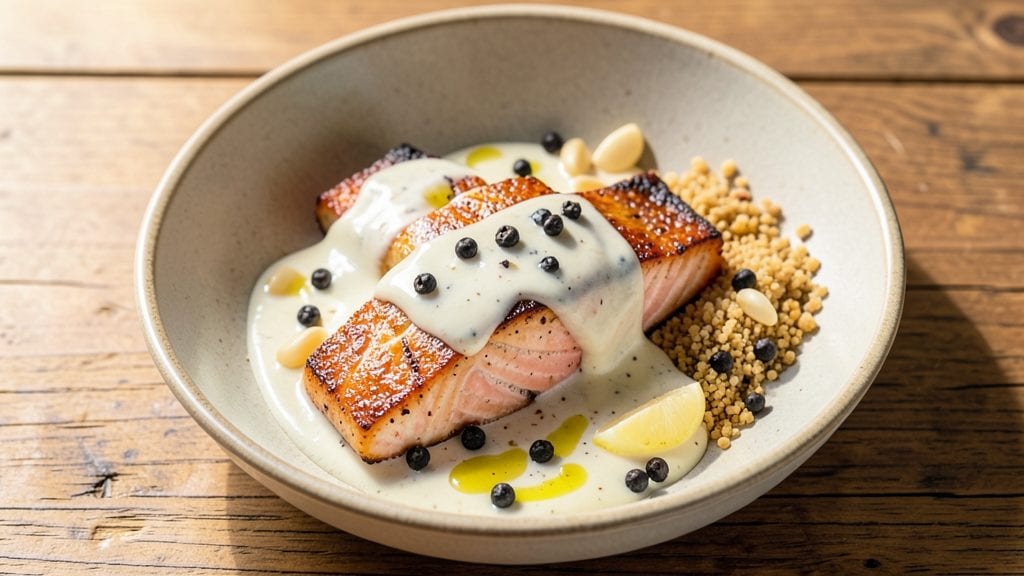
This Filipino baked salmon with mayo recipe fuses crispy cornmeal crust perfection with the creamy tang of traditional Filipino flavors—no frying required. The secret lies in balancing mayo’s richness with garlic, black pepper, and a touch of citrus (calamansi or lemon) for that signature umami kick.
I developed this after years of testing how to achieve that restaurant-quality texture at home, where every bite delivers both crunch and melt-in-your-mouth tenderness.
The magic starts with the crust: cornmeal creates a golden, crispy exterior that locks in juices, while mayo binds the seasonings for a creamy interior. Traditional Filipino flavors shine through with garlic, black pepper, and citrus—no complicated techniques, just precise timing.
This method preserves the salmon’s natural richness while adding that irresistible crunch layer that makes it impossible to stop at one piece.
What you’ll end up with is salmon that’s crispy on the outside, flaky and moist inside, all coated in a sauce that’s equal parts tangy and savory. The cornmeal crust stays crisp even after baking, while the mayo-infused seasoning ensures every bite carries that familiar Filipino comfort.
It’s the kind of dish that transforms a simple weeknight dinner into something special—without requiring hours in the kitchen.
Serve with steamed rice and a simple green salad to let the salmon take center stage. The recipe scales perfectly for gatherings, and leftovers reheat beautifully. Ready to master this fusion of tradition and technique? Let’s get started.
Ingredients for filipino baked salmon with mayo
Twelve ingredients transform simple salmon into restaurant-quality Filipino crispy-creamy perfection.
| Ingredient | Amount | Notes |
|---|---|---|
| Salmon Fillets 🐟 | 4 whole | Skin-on, 6-8 oz each, center-cut preferred |
| Mayonnaise 🥛 | ½ cup | Full-fat, high-quality preferred |
| Cornmeal 🌾 | ½ cup | Fine grind for even coating |
| Garlic Cloves 🧄 | 4 cloves | Freshly minced, aromatic variety |
| Black Peppercorns 🌶️ | 1 ½ tsp | Freshly cracked, coarse grind |
| Lemon Juice 🍋 | 2 tbsp | Freshly squeezed, bright citrus |
| Calamansi Juice 🍊 | 1 tbsp | Or substitute lemon juice if unavailable |
| Extra-Virgin Olive Oil 🫒 | 1 tbsp | Light fruity variety for balance |
| Diamond Crystal Kosher Salt 🧂 | 1 tsp | Fine grain for even seasoning |
| All-Purpose Flour 🌾 | 2 tbsp | For light dusting before baking |
| Fresh Parsley 🌿 | ¼ cup | Chopped, for garnish (optional) |
| Unsalted Butter 🧈 | 1 tbsp | Melted, for basting (optional) |
The salmon fillets are the foundation—center-cut pieces with skin intact ensure even cooking and that coveted crispy exterior. Wild-caught Alaskan salmon from the seafood counter delivers the best texture and flavor profile, though farmed Atlantic works in a pinch. For optimal results, pat the fillets dry with paper towels before seasoning, as moisture prevents the cornmeal crust from adhering properly. The skin-on preference isn't just traditional; it acts as a natural barrier that protects the delicate flesh during baking. If using frozen salmon, thaw it in the refrigerator overnight for even cooking—never at room temperature, as this promotes bacterial growth.
Mayonnaise quality makes or breaks this dish. Duke's or Hellmann's are reliable brands that provide the right balance of richness and stability, but homemade mayo works beautifully if you prefer a fresher taste. Substituting Greek yogurt for mayo reduces fat content but sacrifices that signature creamy texture—use it only if dietary restrictions demand it. For the citrus component, calamansi juice is ideal, though key lime juice offers a close alternative. If neither is available, double the lemon juice and add a pinch of salt to compensate for the lack of natural acidity. The cornmeal should be fine-ground to create a smooth, even coating; medium-grind varieties may result in an uneven crust. Freshly cracked black peppercorns provide superior flavor compared to pre-ground varieties, which lose potency quickly.
Store any unused cornmeal in an airtight container in a cool, dark place for up to 6 months, while mayonnaise should be refrigerated and used within 3 months of opening. Fresh garlic and citrus juices should be used within 5 days of preparation for optimal flavor. The assembled salmon can be refrigerated for up to 24 hours before baking, though it's best served immediately after preparation. For make-ahead convenience, prepare the seasoning mixture in advance and store it in an airtight container in the refrigerator. The baked salmon reheats beautifully in a 350°F oven for 5-7 minutes, though the crust may lose some crispness. To maintain texture, cover loosely with aluminum foil during reheating.
Why You'll Love This Recipe
- No-Fuss Crunch: I swear by the cornmeal crust—just toss the fillets in mayo, dredge them in that golden crumble, and bake. No fancy breading station, no mess, just that addictive texture with zero effort.
- Garlic Mayo Magic: Between us, the mayo isn’t just a binder—it’s the star. That raw garlic minced right into it? It turns every bite into a creamy, punchy flavor bomb that lingers like a hug from your lola.
- Lunchbox Hero: Honestly, this is my go-to for meal prep. Bake a batch on Sunday, slice it up, and pack it with rice or veggies—it stays fresh for days and tastes just as good cold as it does hot.
- Budget Protein Win: Salmon’s pricey, but this recipe stretches it. One fillet feeds two if you serve it with rice, and the mayo-cornmeal combo makes it feel indulgent without breaking the bank. My wallet thanks me.
Step-by-step instructions for crispy cornmeal-crusted salmon
Master this Filipino technique combining crunchy cornmeal crust with velvety mayo sauce for perfect texture balance.
Prepare the Mayo Marinade and Season the Salmon
In a mixing bowl, combine the 0.5 cup mayonnaise with the 2 tablespoons lemon juice and 1 tablespoon calamansi juice. Whisk until smooth and emulsified - the mixture should be thick but pourable. This tangy base forms the creamy center of our dish.
Place the 4 whole salmon fillets on a clean work surface, skin-side down. Using your fingers, gently press the 1 teaspoon diamond crystal kosher salt and 1.5 teaspoons cracked black peppercorns into the flesh side of each fillet. The skin should remain smooth and intact for proper crust adhesion. Let the seasoned fillets rest for 10 minutes while you prepare the crust mixture.
Create the Cornmeal Crust Mixture
In a separate shallow dish, mix the 0.5 cup cornmeal with the 2 tablespoons all-purpose flour. This combination creates a lighter, crispier crust than cornmeal alone. Add the 4 cloves minced garlic and 1 tablespoon extra-virgin olive oil to the mixture, stirring well to distribute the flavors evenly.
Dust each salmon fillet with the cornmeal mixture, pressing gently to ensure complete coverage on all sides. The crust should adhere firmly but not clump. For extra crispiness, I recommend chilling the coated fillets for 15 minutes in the refrigerator while you preheat the oven to 400°F. This step prevents the crust from sliding off during baking.
Bake to Golden Perfection
Place the coated salmon fillets on a parchment-lined baking sheet, skin-side down. Bake in the preheated oven for 12-15 minutes until the crust turns golden brown and the internal temperature reaches 145°F. The cornmeal should develop a crisp texture while the salmon remains moist inside.
During the last 2 minutes of baking, melt the 1 tablespoon unsalted butter in a small saucepan over low heat. This butter will be used to finish the mayo sauce for added richness. Remove the salmon from the oven and let it rest for 5 minutes before serving - this allows the juices to redistribute for maximum tenderness.
Assemble and Serve
While the salmon rests, spoon the mayo mixture into a small saucepan and warm gently over low heat for 1-2 minutes. The sauce should remain creamy but not hot enough to cook the eggs in the mayonnaise. Stir in the melted butter and continue warming until just combined.
Garnish each serving with the 0.25 cup chopped fresh parsley and serve immediately with the warm mayo sauce spooned over the top. The contrast between the crispy cornmeal crust, tender salmon, and creamy tangy sauce creates the perfect balance of textures and flavors in this Filipino-inspired dish.
Pro Tips For Making Filipino Baked Salmon With Mayo
- Preheat Like a Pro: Turn your oven to 375°F (190°C) and let it roar for 10 full minutes before baking—no half-measures. I learned this after my first batch came out soggy; the mayo coating needs a hot oven to crisp properly, not just warm it.
- Toast That Cornmeal: Dry-toast the cornmeal in a pan for 2-3 minutes until it smells nutty and golden. Skipping this step means your salmon will stick to the mayo like glue instead of forming that crispy, crunchy armor.
- Don’t Overmix the Mayo: Stir the mayo, garlic, and pepper into the cornmeal just until combined—lumpy is fine. Overworking it turns the coating into a paste that’ll make your salmon greasy instead of crispy.
- Bake on Wire Racks: Place your salmon on a wire rack set over a baking sheet—air circulates better, so the cornmeal crust browns evenly instead of steaming into a sad, flat mess. (Yes, it takes 5 extra minutes to set it up, but it’s worth it.)
Storing and reheating this filipino baked salmon with mayo
Refrigerator Storage
Store cooked salmon in an airtight container with the mayo sauce separated to prevent sogginess. Place it in the refrigerator at 40°F or below for up to 2 days—the cornmeal crust stays crisp for the first day but may soften slightly after that.
I always let it cool completely before storing to avoid condensation. 🥬
Freezer Prep Tips
For longer storage, wrap each portion tightly in plastic wrap before placing in a freezer bag with all air removed. Label with the date and freeze for up to 3 months. The crust texture remains intact when reheated properly, though it won't be as crisp as fresh.
Oven Reheating Method
Preheat your oven to 350°F and place the salmon on a baking sheet. Cover loosely with aluminum foil to retain moisture for 5-7 minutes. The internal temperature should reach 145°F again. Add a splash of water or lemon juice to the mayo sauce before reheating to restore creaminess. ✨
Microwave Revival
For quick meals, use 50% power for 1-2 minutes on a microwave-safe plate. Stir the mayo sauce separately and combine just before eating. This method works best for the salmon itself, though the crust may lose some crispness. I recommend this only for emergencies!
Sauce Refresh
Reheat the mayo sauce separately by gently warming it in a small saucepan over low heat for 1-2 minutes. Stir in 1 teaspoon melted butter to restore richness.
If the sauce separates, whisk vigorously with a splash of warm water to re-emulsify. The sauce should be warm but never hot enough to cook the eggs.
Serving Leftovers
Serve reheated salmon with steamed jasmine rice and a side of pickled vegetables to cut through the richness. The cornmeal crust pairs beautifully with the tangy sauce, making leftovers taste just as satisfying as the first serving. Store any unused rice separately to maintain texture.
Nutrition facts
Frequently asked questions
Why does the cornmeal crust need to chill before baking?
Chilling the coated salmon for 15 minutes helps the crust adhere better and prevents it from sliding off during baking. The cold temperature also firms up the salmon slightly, creating a more even cooking surface. This step is especially important for thicker fillets—it ensures that crispy texture we all love!
Can I substitute mayonnaise with something else for dietary reasons?
For a lighter option, try Greek yogurt mixed with 1 tablespoon lemon juice—it reduces fat but sacrifices some creaminess. For a vegan alternative, use vegan mayo with an extra 1/2 teaspoon cornstarch to help it thicken. Just note that texture and richness will differ from traditional mayo.
How do I know when the salmon is fully cooked?
The salmon is done when it reaches an internal temperature of 145°F and the crust turns golden brown. Use a meat thermometer for accuracy—insert it into the thickest part of the fillet. Overcooking can dry out the salmon, so aim for 12-15 minutes total baking time. The crust should be crisp, not rubbery.
What’s the best way to serve this dish for a special occasion?
Pair it with steamed jasmine rice and a simple arugula salad with calamansi vinaigrette. For an elegant touch, arrange the salmon on a platter with lemon slices and fresh parsley. Garnish the mayo sauce with a sprinkle of black pepper and a drizzle of olive oil before serving. This presentation highlights the dish’s crispy-creamy balance beautifully!
Can I make this recipe ahead of time?
You can prep the seasoning mixture and coat the salmon up to 24 hours ahead, but bake it fresh for the best texture. If storing cooked salmon, keep the mayo sauce separate to maintain crispness. Reheat the salmon in the oven at 350°F for 5-7 minutes with foil to avoid drying out. The crust won’t be as crisp as fresh, but it’ll still taste delicious!