Main Courses
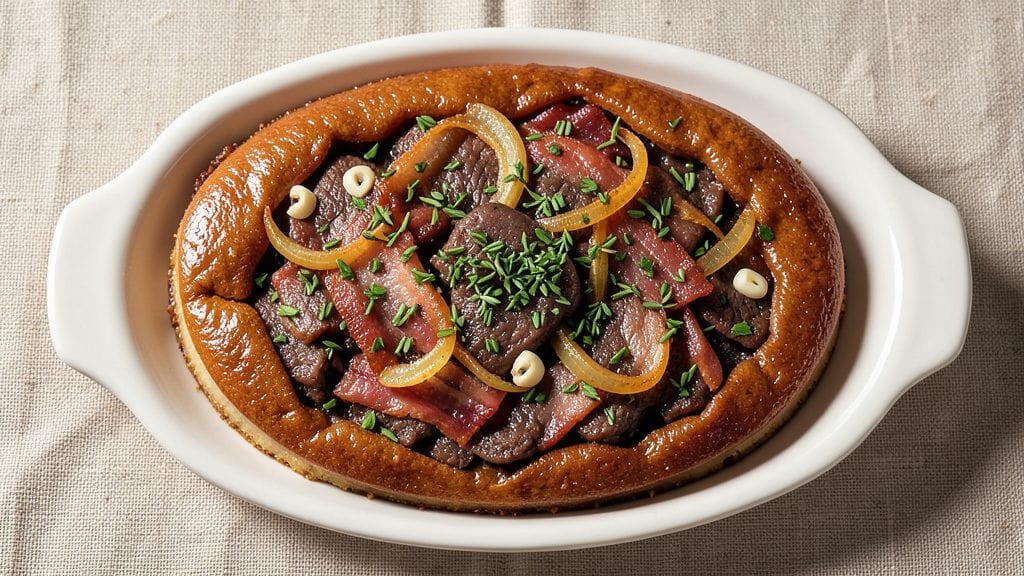
Creating an authentic beef liver terrine transforms humble liver into a luxurious, silky-smooth centerpiece with a fragrant herbed crust. This classic French preparation balances rich flavors and delicate textures, requiring precise technique but delivering restaurant-quality results at home.
The key lies in blending the liver with fat and seasonings until velvety, then layering it carefully in a mold for an elegant presentation.
Traditional terrine-making relies on two essential steps: blending liver with fat to prevent dryness and chilling thoroughly to set the texture. I use a combination of beef liver, pork fat, and aromatic herbs like thyme and parsley to build depth of flavor, while a crisp herbed crust adds visual appeal.
The result is a dish that feels both rustic and refined—perfect for special occasions or when you want to impress guests.
By following this method, you'll achieve a terrine with an impossibly tender interior and a golden, fragrant crust that holds its shape when sliced. The liver's natural richness pairs beautifully with tangy mustard, pickles, or crusty bread, making it a versatile centerpiece for any meal.
Proper chilling ensures clean slices every time, while the herbed crust adds an aromatic finish that elevates the dish.
This recipe preserves the traditional techniques while adapting them for home cooks, so you can create a showstopping terrine without specialized equipment. Whether serving at a holiday gathering or a dinner party, the combination of silky texture and herbed crust will leave a lasting impression.
Let's get started on this timeless preparation.
Ingredients for beef liver terrine
Transform humble beef liver into restaurant-quality terrine with these precise, aromatic ingredients for velvety texture and fragrant crust.
| Ingredient | Amount | Notes |
|---|---|---|
| Beef Liver 🥩 | 2 lb | Fresh, trimmed of connective tissue |
| Pork Fatback 🍖 | 1 lb | Diced into 1/2-inch cubes |
| Fresh Thyme Leaves 🌿 | ¼ cup | Finely chopped, stems removed |
| Fresh Parsley Leaves 🌿 | ¼ cup | Finely chopped, flat-leaf preferred |
| Shallots 🧅 | 2 whole | Minced, skin removed |
| Garlic Cloves 🧄 | 4 cloves | Minced, skin removed |
| Fresh Breadcrumbs 🍞 | 1 cup | From day-old baguette, toasted |
| Extra-Virgin Olive Oil 🫒 | ¼ cup | For crust binding |
| Diamond Crystal Kosher Salt 🧂 | 1 ½ tsp | Fine grain preferred |
| Freshly Ground Black Pepper 🌶️ | 1 tsp | Coarsely ground |
| Brandy 🍷 | ½ cup | High-proof, 40% ABV minimum |
| Egg Whites 🥚 | 2 whole | Room temperature, beaten |
| Unsalted Butter 🧈 | 2 tbsp | Cold, cubed for crust |
The liver and pork fatback form the terrine's foundation, so quality matters. Butcher shops offer the freshest cuts, but grocery stores carry suitable options if labeled 'fresh' and trimmed of connective tissue. Look for beef liver with a deep red hue and minimal greenish tint—this indicates freshness. The pork fatback should be firm with a white, marbled appearance. Costco or Whole Foods typically carry high-quality cuts suitable for terrines. Fresh herbs should be vibrant green with no wilting, while shallots and garlic should be firm and free of sprouts. The breadcrumbs should come from a day-old baguette, toasted lightly to remove moisture and enhance texture. For the crust, unsalted butter is essential—it creates a golden, crisp finish that pre-shredded versions cannot replicate.
No brandy on hand? Dry white wine or apple cider vinegar work as substitutes, though brandy's depth enhances the terrine's complexity. Fresh herbs unavailable? Dried thyme and parsley at one-third the amount suffice, but fresh is preferred for aromatic intensity. The shallots can be replaced with red onion at double the quantity, though shallots provide a more delicate flavor. For the crust, panko breadcrumbs offer a lighter texture if traditional breadcrumbs aren't available. The egg whites must be beaten to stiff peaks for structural integrity—room temperature ensures proper binding. If the terrine mold isn't available, a loaf pan lined with plastic wrap works perfectly.
Proper storage ensures a silky texture. The terrine must chill 4-6 hours before slicing to set completely. Once set, it keeps 3-4 days refrigerated, wrapped tightly in plastic. For longer storage, freeze in slices for up to 3 months. The herbed crust remains crisp when stored in an airtight container. Reheat slices gently in a dry skillet for 10-15 seconds per side to restore crispness. This terrine pairs beautifully with cornichons, mustard, or crusty bread, making it a versatile centerpiece for any meal.
Why You'll Love This Recipe
- No-Fuss Assembly: I swear by this—just chop the liver into even pieces, layer it with that rich pork fatback, and tuck in the shallots and herbs. No fancy techniques, no stress, just hands-on simplicity that somehow feels like a special occasion.
- Rich, Earthy Depth: That pork fatback renders down into pure flavor, while the thyme and parsley brighten every bite. The liver stays tender but packs a punch—like a steakhouse bite with none of the fuss.
- Weekend Project, Weeknight Fix: Make it ahead for holiday gatherings or pull it out for a lazy Sunday brunch. Slice thin for charcuterie boards or serve with crusty bread—it’s the kind of dish that works just as hard for you as you do for it.
- Budget Booster: Liver is one of the most affordable proteins around, and this recipe stretches it further with fatback that adds luxury without the cost. Honestly, I’ve fed a crowd for less—and they never guessed how budget-friendly it was.
Step-by-step instructions for beef liver terrine
Mastering this terrine requires precision in technique and timing—here's how to achieve a silky interior with a perfectly crisp herbed crust.
Prepare the Liver Mixture
Trim all connective tissue from the 2 lb beef liver and pat it thoroughly dry with paper towels. This step is critical—any moisture will prevent proper binding later. Place the liver in a food processor and pulse until finely ground but not pasty, about 10-12 pulses. Transfer to a large mixing bowl.
Add the 1 lb diced pork fatback, 0.25 cup finely chopped fresh thyme leaves, 0.25 cup chopped fresh parsley leaves, 2 minced shallots, and 4 minced garlic cloves to the bowl. Mix gently with your hands to combine, being careful not to overwork the meat. The mixture should look coarse but uniform, with visible fat pieces distributed throughout.
Season and Bind the Mixture
In a small bowl, whisk together the 0.5 cup brandy, 2 tbsp extra-virgin olive oil, 1.5 tsp diamond crystal kosher salt, and 1 tsp freshly ground black pepper. Slowly pour this mixture over the liver while stirring continuously with a wooden spoon. The brandy will begin to cook off some of its alcohol, adding depth of flavor.
Add the 2 room-temperature egg whites and mix until fully incorporated. The mixture should come together into a cohesive, slightly sticky mass. If it feels too dry, add 1-2 tablespoons of cold water. The texture should resemble wet sand—firm enough to hold shape but still malleable. Cover and refrigerate for 30 minutes to allow flavors to meld.
Assemble and Crust the Terrine
Preheat your oven to 325°F. Lightly grease a 9x5-inch loaf pan with extra-virgin olive oil. Spread 1 cup fresh breadcrumbs evenly over the bottom of the pan, pressing gently to create a firm base. Spoon the liver mixture into the pan, packing it down firmly with your hands or a small spatula. The surface should be level but not compacted too tightly.
In a separate bowl, mix the 2 tbsp cold cubed unsalted butter with the remaining breadcrumbs. Sprinkle this mixture evenly over the top of the liver, pressing down lightly to adhere. This creates both the crust and a flavor barrier that prevents the terrine from drying out during cooking.
Bake to Perfection
Place the terrine in the center of your preheated oven and bake for 45 minutes. After this initial baking, reduce the oven temperature to 275°F and continue baking for an additional 1 hour 15 minutes. The terrine is done when the internal temperature reaches 145°F and the crust is deep golden brown with crisp edges.
Remove from the oven and let the terrine rest in the pan for 15 minutes before carefully unmolding onto a wire rack. The terrine should hold its shape but still feel slightly yielding to the touch. If you encounter any resistance when unmolding, gently run a thin knife around the edges to release it cleanly.
Chill and Serve
Transfer the terrine to a plate and refrigerate, uncovered, for at least 4 hours or overnight. This chilling period allows the flavors to fully develop and the texture to set properly. When ready to serve, slice into ½-inch thick pieces using a sharp knife. The interior should be silky-smooth with a delicate pink hue, while the crust maintains its crisp texture.
Serve the terrine chilled or at room temperature, accompanied by a simple arugula salad or crusty bread. The brandy-infused liver pairs beautifully with these elements, creating a harmonious balance of rich flavors and textures. For best results, consume within 3-4 days of preparation.
Pro Tips For Making Beef Liver Terrine
- Trim the Fatback Thin: Pork fatback isn’t just filler—it’s the terrine’s moisture shield. Score it into 1/8-inch slices before layering so it melts evenly during cooking. I used to skip this, and the terrine would dry out in spots while other areas stayed greasy.
- Sear the Liver First: Pat the beef liver bone-dry with paper towels, then sear each slice in a screaming-hot pan for 30 seconds per side. This stops it from turning to mush when layered. After burning through three batches of soggy terrine, I finally got it—high heat is non-negotiable.
- Pulse Shallots, Don’t Chop: Finely pulse shallots in a food processor (no blade!) until they’re almost paste-like. This keeps them from clumping in the fatback and ensures every bite has bright, even flavor. Chopping them by hand? You’ll regret it when they pool in the center.
- Chill the Terrain Before Slicing: Let the terrine rest in the fridge for at least 4 hours—overnight is better—before slicing. Cold terrine holds its shape, so you get clean, uniform slices instead of a wobbly mess. I learned this after serving a slice that collapsed like a pancake.
Creative variations of this beef liver terrine
Herb-Infused Variations
Swap the thyme and parsley for fresh rosemary and sage—about 0.25 cup each—for a more robust, earthy flavor profile. The rosemary adds piney notes that complement the liver's richness, while sage brings a subtle sweetness.
I also recommend adding 1 tsp grated lemon zest to brighten the terrine and cut through the fat. For a Mediterranean twist, include 0.25 cup finely chopped fresh oregano alongside the parsley. 🌿
Spiced Crust Options
Transform the crust into a spiced masterpiece by mixing 1 tsp smoked paprika or ½ tsp cayenne pepper into the breadcrumb-butter topping. The paprika adds a smoky depth, while cayenne introduces a subtle heat that pairs beautifully with the liver’s richness.
For a sweeter contrast, sprinkle 1 tbsp honey or 1 tbsp maple syrup over the crust before baking—it caramelizes into a glossy finish. 🔥
Wine & Mushroom Twist
Replace the brandy with ½ cup dry red wine, such as Cabernet Sauvignon or Pinot Noir, to infuse the terrine with wine’s tannins and acidity. Add ½ cup finely chopped cremini mushrooms to the liver mixture for an umami boost.
Sauté the mushrooms in 1 tbsp olive oil with a pinch of salt before mixing them into the terrine. This variation adds depth and a meatier texture. 🍷
Sweet & Savory Fusion
For a dessert-like terrine, fold in ½ cup finely chopped dried apricots or figs into the liver mixture, along with 1 tsp ground cinnamon. The sweetness balances the liver’s richness, creating a unique fusion of savory and sweet.
Top the crust with 1 tbsp chopped pistachios or walnuts for added crunch. This version works beautifully as a holiday appetizer or dessert accompaniment. 🍯
Game Bird Adaptation
Swap the beef liver for duck or pheasant liver—about 1.5 lb total—for a gamey, luxurious twist. Increase the pork fatback to 1.5 lb to compensate for the leaner game meat. Add 1 tbsp fresh tarragon to the herb mix for a classic French game bird flavor.
This variation is ideal for special occasions and pairs well with a bold red wine or dark rye bread. 🦆
Vegetarian-Friendly Option
For a vegetarian terrine, replace the liver with 1.5 lb finely chopped hearts of palm and ½ lb walnuts pulsed in a food processor. Use 1 lb vegan butter (like Miyoko’s) instead of pork fatback and add 1 tbsp soy sauce for umami.
The crust can be made with vegan breadcrumbs and olive oil** instead of butter. This version is lighter but still rich and satisfying. 🌱
Nutrition facts
Frequently asked questions
Why does the terrine need pork fatback?
The pork fatback prevents the liver from drying out during baking. Fat acts as a natural moisture barrier, keeping the terrine silky-smooth rather than rubbery. Using 1 lb of fatback for every 2 lb of liver creates the perfect balance of richness and moisture.
Can I make this terrine ahead of time?
This terrine actually tastes better after 24 hours of chilling, as the flavors meld and the texture sets perfectly. Wrap it tightly in plastic and refrigerate for up to 4 days or freeze for 3 months. Just let it come to room temperature before slicing for clean cuts.
What if my terrine cracks when unmolding?
Cracking usually happens when the terrine chills too quickly or isn't packed firmly enough. To fix it, gently press the terrine back together before slicing. For prevention, ensure the mixture is packed tightly in the pan and chills gradually in the fridge. A 15-minute rest at room temperature before unmolding also helps.
How do I serve beef liver terrine?
Slice the terrine into ½-inch thick pieces and serve chilled or at room temperature. Classic pairings include cornichons, Dijon mustard, or crusty bread. For a modern twist, serve with a tangy arugula salad or roasted root vegetables. The herbed crust adds a fragrant finish that complements these accompaniments beautifully.