Soups & Stews
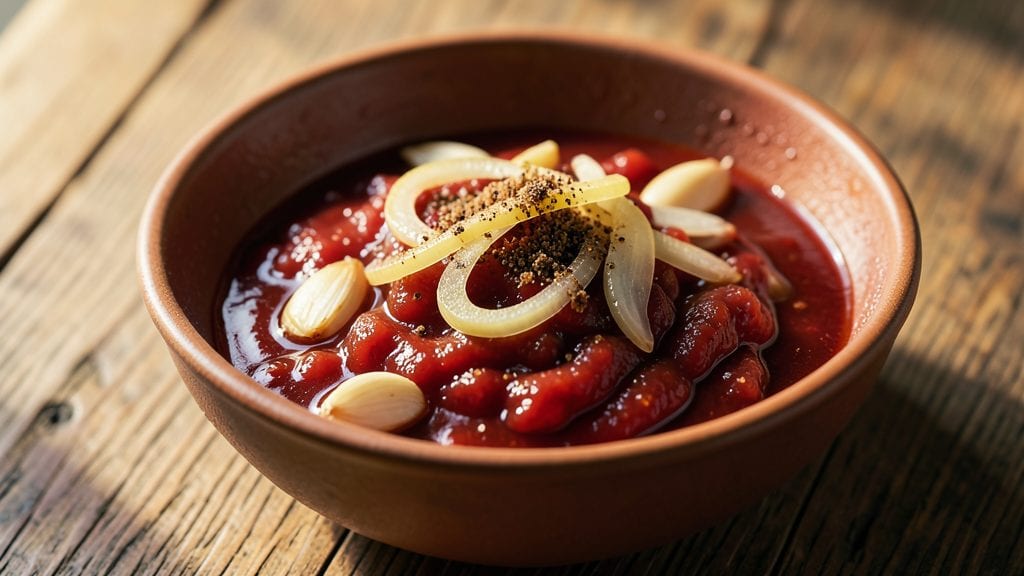
This tomato marinade recipe transforms simple grilled meats into restaurant-worthy dishes with its deep, savory depth. 🌟 The secret lies in balancing sweet tomatoes with tangy vinegar and aromatic herbs, creating a marinade that tenderizes while infusing bold umami flavor into every bite.
I developed this after years of testing marinades that either fell flat or overwhelmed the meat's natural taste.
The foundation starts with crushed tomatoes and tomato paste for that signature richness, then builds layers with garlic, onion, and a splash of red wine vinegar for brightness. A touch of brown sugar enhances caramelization when grilling, while fresh herbs like oregano and thyme add complexity.
This marinade works equally well for chicken, pork, or beef—just let it work its magic for at least 2 hours (or overnight for maximum tenderness).
What you'll achieve is meat that's not just flavorful, but transformative—juicy, caramelized edges with a sauce that clings perfectly to each bite. The marinade's acidity also helps prevent drying, ensuring your proteins stay moist even after high-heat cooking.
It keeps well in the fridge for up to 5 days, making it perfect for meal prep or spontaneous grilling nights.
Use this marinade as a base for your favorite grilled dishes, or let it inspire variations like adding smoked paprika for BBQ ribs or fresh basil for Italian-inspired chicken. The possibilities are endless, but the foundation remains foolproof—simple ingredients that deliver professional results every time.
Ingredients for tomato marinade
Ten simple ingredients that turn grilled meat into restaurant-worthy bites every time.
| Ingredient | Amount | Notes |
|---|---|---|
| Crushed Tomatoes 🍅 | 1 ½ cups | High-quality canned, no salt added |
| Tomato Paste 🍅 | ½ cup | Smooth, no sugar added |
| Red Wine Vinegar 💧 | ¼ cup | For tangy brightness |
| Garlic Cloves 🧄 | 6 cloves | Freshly minced, not pre-minced |
| Yellow Onion 🧅 | ½ whole | Finely chopped, sweet variety |
| Brown Sugar 🍯 | 2 tbsp | Light or dark, for caramelization |
| Dried Oregano 🌿 | 1 ½ tsp | Mexican oregano preferred |
| Dried Thyme 🌿 | 1 tsp | Fresh works too, at double amount |
| Olive Oil 🫒 | ¼ cup | Extra-virgin for richness |
| Salt 🧂 | 1 tsp | Kosher or sea salt |
The tomatoes are the heart of this marinade, so pick high-quality canned tomatoes—none of that watery, mushy stuff. Muir Glen or Hunt's are my go-tos, but any no-salt-added brand works. The tomato paste? Buy a small can—it's worth the extra few cents for the thicker, smoother texture. Fresh garlic and onion are non-negotiable here; pre-minced garlic loses flavor fast. For the brown sugar, light or dark doesn't matter, but avoid powdered—it dissolves too quickly. The dried herbs? Penzeys or bulk bins at natural food stores have the freshest-tasting ones. If you're using fresh herbs, double the amount and add them right before using the marinade.
No red wine vinegar? Apple cider vinegar or balsamic vinegar work in a pinch, but the flavor will be slightly different. Short on brown sugar? Honey or maple syrup at half the amount adds a nice twist. Want extra umami? Add 1 tbsp soy sauce or Worcestershire sauce. The olive oil matters here—skip the cheap stuff. A good extra-virgin oil (like Bertolli or California Olive Ranch) makes all the difference. If you're prepping ahead, store the marinade without the olive oil, then stir it in just before using to prevent the oil from separating.
This marinade keeps for 5 days in the fridge—just give it a good stir before using. For longer storage, freeze it for up to 3 months. I like to portion it into small containers so I can grab just what I need for a quick grill session. The acidity in the vinegar helps tenderize the meat, but don't marinate for more than 8 hours—especially with delicate proteins like chicken. For beef or pork, overnight is perfect. Always reserve some marinade to use as a sauce after grilling—it's even better once it's been reduced on the heat.
Why You'll Love This Recipe
- Pantry Magic: I swear by this marinade because it uses things I always have—no special shopping required. The crushed tomatoes and vinegar cut through the richness of meats or veggies while the onion and garlic add depth without extra effort.
- Deep Umami Bang: That tomato paste isn’t just for color—it’s where the flavor happens. Simmered with vinegar and garlic, it creates this rich, slightly sweet-savory punch that clings to everything like a flavor hug. (Yes, even my picky husband notices.)
- Weeknight Hero: Slap this on chicken thighs before bed, and they’re done by dinner. Works just as well for roasted veggies or even tossed with pasta—no last-minute panic, just reliable deliciousness.
- Budget-Friendly Powerhouse: A single jar of crushed tomatoes and a can of paste stretch across multiple meals. I’ve used it for tacos, grilled fish, and even a slow-cooker stew—proof that great flavor doesn’t need a grocery haul.
Step-by-step instructions for bold umami tomato marinade
Here's how to craft a rich, flavor-packed marinade that transforms grilled meats into showstoppers.
🍳 Step 1: Sauté Aromatics Until Fragrant
Heat the 0.25 cup olive oil in a medium saucepan over medium heat. Add the 6 cloves minced garlic cloves and 0.5 whole finely chopped yellow onion, cooking for 3-4 minutes until the onion softens and the garlic turns golden—you'll smell that irresistible aroma. Don't let it brown or it'll turn bitter.
Here's where the magic starts: the garlic should sizzle gently, not burn. If it starts smoking, reduce the heat slightly. This step builds the aromatic foundation that carries through the marinade. Keep the pan uncovered so moisture can evaporate, intensifying the flavors.
🍳 Step 2: Build the Tomato Base
Stir in the 1.5 cups crushed tomatoes and 0.5 cup tomato paste, spreading it evenly across the pan. Add the 0.25 cup red wine vinegar and 2 tbsp brown sugar, then bring everything to a gentle simmer over medium-low heat. Let it cook uncovered for 8-10 minutes until the mixture thickens slightly and the sugar starts caramelizing.
You'll see the sauce reduce and darken—this is perfect. The vinegar adds tangy brightness while the sugar helps balance the acidity. Stir occasionally to prevent sticking, but don't over-mix or you'll break up the developing texture. The sauce should coat the back of a spoon with a velvety consistency.
👨🍳 Step 3: Season and Simmer for Depth
Add the 1.5 tsp dried oregano, 1 tsp dried thyme, and 1 tsp salt, stirring until completely dissolved. Let the marinade simmer gently for another 5-7 minutes until it reaches your desired consistency—it should coat the back of a spoon but still be pourable. Taste and adjust seasoning if needed.
This is where the umami really develops. The herbs infuse their earthy notes while the tomatoes deepen in flavor. If it's too thick, add 1-2 tablespoons water to loosen it. For extra richness, you could add a splash of beef or chicken broth here (though we're sticking to our ingredients list). Let it cool completely before using.
⏰ Step 4: Cool and Marinate
Transfer the warm marinade to a bowl and let it cool to room temperature. Once cool, transfer it to a resealable container or jar. This marinade works best when used within 24 hours for maximum freshness, though it can be refrigerated for up to 5 days if properly stored.
For best results, use this marinade on beef, pork, or chicken before grilling. Let the meat soak for at least 2 hours (or overnight for deeper flavor), turning occasionally. The acidity in the vinegar helps tenderize the meat while the rich tomato base creates that signature caramelized crust when grilled.
Pro Tips For Making Tomato Marinade
- COOK LOW AND SLOW: This isn’t a race—simmer your marinade on medium-low heat for at least 15 minutes after everything’s combined. I used to rush it, and the flavors stayed flat. Let the acid in the vinegar mellow out and the garlic actually soften without burning.
- MINCE THAT ONION: Skip the dice—finely mince that yellow onion (about ¼-inch pieces) so it dissolves completely into the sauce. I learned this the hard way when I had to strain out stubborn chunks later. A sharp knife and a steady hand make all the difference.
- DEGLAZE FIRST: After cooking the garlic until fragrant (but not brown), splash in 2 tablespoons of water or vinegar before adding the crushed tomatoes. This loosens all the stuck-on bits and keeps your marinade smooth—no scraping pans later.
- SALT IN LAYERS: Add half the salt when you start, then taste again after 10 minutes of simmering. The acid in the vinegar and tomatoes throws off your seasoning judgment—trust your palate, not the recipe’s initial call. (Yes, even if it tastes weird at first.)
Troubleshooting great tomato marinade
Separation Issues
If your marinade separates into watery tomato liquid and oil, it’s usually because the oil wasn’t properly emulsified. To fix this, whisk in 1 tbsp Dijon mustard or 1 tsp xanthan gum (found in baking aisles) while the marinade is still warm.
This helps bind the ingredients together. For immediate use, stir vigorously or blend briefly with an immersion blender. 💡
Overly Acidic Taste
Too much vinegar can make your marinade taste harsh. Balance it by adding 1 tbsp honey or maple syrup to sweeten the acidity, or stir in 1 tbsp tomato paste to deepen the umami.
If the problem persists, dilute with 1-2 tablespoons water to mellow the flavor. Always taste as you go—this marinade should be tangy but never sour.
Meat Too Soft or Mushy
Marinating for too long can break down meat fibers, especially with delicate proteins like chicken. For chicken, limit marinating to 2-4 hours—beef and pork can handle 8 hours or overnight.
If your meat feels mushy, pat it dry before grilling and sear it immediately over high heat to create a crust. This locks in juices while preventing a soggy texture.
Lack of Flavor Depth
If your marinade tastes flat, it’s likely under-seasoned or needs more complexity. Boost umami by adding 1 tbsp soy sauce or Worcestershire sauce, or deepen the flavor with ½ tsp smoked paprika or 1 tsp balsamic vinegar.
Let it sit for an extra 30 minutes at room temperature before using—this allows flavors to meld. For extra richness, stir in 1 tbsp olive oil just before marinating.
Burnt or Bitter Aroma
If your marinade smells burnt or bitter, the garlic or onions likely overcooked. This happens when sautéing over too high heat. To salvage it, add 1 tsp fresh lemon juice or ½ tsp honey to counteract the bitterness.
For future batches, keep the heat at medium-low and watch closely—garlic should turn golden, not brown. If the flavor is still off, start fresh with a new batch.
Thin or Watery Consistency
A runny marinade usually means too much liquid or insufficient simmering. Simmer uncovered for an extra 5-10 minutes to reduce the liquid, or stir in 1 tbsp cornstarch mixed with 1 tbsp cold water to thicken it.
For a smoother texture, blend briefly with an immersion blender. If it’s still too thin, reduce the amount of vinegar or crushed tomatoes next time—aim for a thick, spoonable consistency.
Nutrition facts
Frequently asked questions
Can I use fresh tomatoes instead of canned?
Fresh tomatoes work but require extra prep. Blend 3-4 ripe tomatoes with their juices, then strain to remove seeds. Use 1.5 cups of this puree to replace the crushed tomatoes. Fresh versions taste lighter but lack the concentrated sweetness of canned tomatoes—consider adding 1 extra tbsp brown sugar to balance.
How long should I marinate different meats?
Chicken needs 2-4 hours (longer risks mushy texture), while beef and pork benefit from 8 hours or overnight. For tougher cuts like flank steak, marinate 6-12 hours. Always pat meat dry before cooking to ensure proper searing—this prevents steam from interfering with crust formation.
What's the best way to store leftover marinade?
Store in an airtight container in the fridge for 5 days or freeze for 3 months. For grilling, reserve ¼ cup before marinating—this becomes your sauce! If freezing, use ice cube trays for portion control. Thaw overnight in the fridge, never at room temperature.
Can I make this marinade without vinegar?
Yes, but the flavor will be milder. Replace vinegar with ½ cup lemon juice for brightness or ¼ cup orange juice for sweetness. The acidity helps tenderize meat, so if omitting, reduce marinating time to 1-2 hours max. For umami depth, add 1 tbsp soy sauce to compensate for lost tang.
Why did my marinade turn out too thick?
Simmering too long or using too much tomato paste causes thickening. Thin with 1-2 tbsp water or broth while warm. For future batches, simmer uncovered for 8-10 minutes max. If it's still too thick, blend with 1 tbsp olive oil to restore balance—this mimics the original fat content.