
Side Dishes
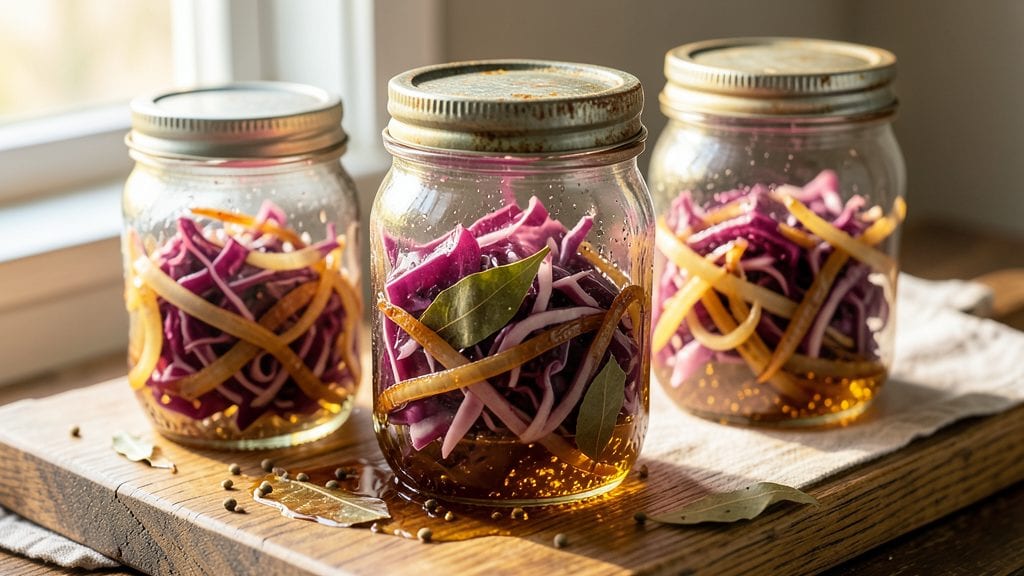
Preserving sweet and sour red cabbage through canning unlocks a pantry staple that brings tangy, crunchy flavor to meals year-round. The vinegar-infused process creates a vibrant side dish that maintains its texture and bright acidity for months, making it perfect for holiday tables or quick weeknight sides.
I developed this recipe after realizing how versatile preserved red cabbage could be—whether served alongside roasted meats or stirred into hearty stews.
This method emphasizes food safety through proper sterilization and canning techniques, ensuring your preserved cabbage stays fresh without compromising flavor. The balance of sweetness from onions and spices with the sharpness of vinegar creates a complex taste profile that improves with time.
Unlike fresh red cabbage, the canned version holds its crunch while delivering bold flavor in every bite.
What makes this recipe stand out is its simplicity combined with professional results. You'll need just a few ingredients and basic canning equipment to create jars filled with vibrant purple cabbage that stays crisp and tangy for up to a year.
The process takes about an hour of active time, with most of that dedicated to preparation and sterilization—well worth it for the convenience of having this flavorful side ready whenever you need it.
Once canned, this sweet and sour red cabbage transforms into a versatile ingredient—serve it warm as a side, add it to sandwiches for crunch, or mix it into salads for a tangy twist.
The possibilities are endless, and the satisfaction of creating a pantry staple that lasts all year is unmatched. Let's get started on preserving this classic side dish.
Ingredients for sweet and sour red cabbage canning
Six essential ingredients and basic canning equipment transform fresh cabbage into a tangy, crunchy pantry staple.
| Ingredient | Amount | Notes |
|---|---|---|
| Red Cabbage 🥬 | 2 lb | Fresh, outer leaves removed |
| Yellow Onions 🧅 | 2 whole | Medium-sized, thinly sliced |
| White Vinegar 💧 | 2 cups | 5% acidity for balance |
| Granulated Sugar 🍚 | 1 ½ cups | White or brown preferred |
| Bay Leaves 🌿 | 4 whole | Fresh or dried |
| Mustard Seeds 🌶️ | 1 tbsp | Whole, lightly crushed |
| Allspice Berries 🌿 | 1 tsp | Crushed for depth |
| Salt 🧂 | 1 ½ tsp | Kosher or sea salt |
| Water 💧 | 2 cups | Filtered or distilled preferred |
| Lemon Juice 🍋 | ¼ cup | Freshly squeezed |
| Canning Jars 🍶 | 4 pint | Mason jars, sterilized |
| Lids and Rings 🔒 | 4 whole | New lids for sealing |
The quality of your red cabbage makes all the difference. Look for heads with vibrant purple leaves and firm texture—avoid any with wilted spots or yellowing. Local farmers markets often have the freshest options, but the grocery store works too if you pick heads with crisp outer leaves. Yellow onions should be firm and free of sprouts. The vinegar is critical: 5% acidity is standard for safe canning, and white vinegar gives a cleaner flavor than apple cider. For the sugar, Turbinado or brown sugar adds subtle caramel notes that enhance the sweet-sour balance, though white sugar works perfectly fine if that's what you have on hand.
No mustard seeds? Substitute 1/2 tsp ground mustard, though the texture will differ slightly. Running out of allspice? Cinnamon sticks or cloves work beautifully—just use half the amount. For vinegar substitutes, apple cider vinegar or white wine vinegar both work, though white vinegar has a sharper tang. If you're short on jars, sterilize any glass containers with boiling water—just ensure they're heat-safe. The lemon juice can be omitted if you're concerned about acidity levels, but it brightens the final flavor significantly. For those with dietary restrictions, reduce sugar by 1/4 cup if desired, though the canning process requires sufficient sweetness to balance the acidity.
This preserved cabbage keeps for up to 1 year when stored in a cool, dark place. Check lids after 24 hours—any that haven't sealed should be refrigerated and used within a week. The flavor actually improves over time, so don't be afraid to make extra. For best results, reheat gently on the stove before serving to restore the crunch. I always make at least two batches—one for immediate use and one to store for holidays. The jars are perfect for gifting too—just tie a ribbon around the lid and you've got a beautiful, edible present.
Why You'll Love This Recipe
- No-Fuss Canning: I’ll be real—this recipe only needs five ingredients and a pot. Shred the cabbage, slice the onions, toss them in vinegar and sugar, and let the heat do the work. No fancy tools, no stress.
- Tangy-Sweet Magic: That vinegar-sugar balance? It’s like a party in your mouth. The cabbage stays crisp, the onions caramelize just enough, and the bay leaves add this earthy depth that makes it taste like a restaurant dish—not just canned veggies.
- Potluck Hero: Between us, this is the side dish that everyone asks for. Bring it to holiday dinners, BBQs, or even a casual Sunday lunch. It pairs with everything—roast chicken, pork chops, or just straight from the jar with a spoon.
- Pantry Goldmine: Honestly, this recipe turns cheap ingredients into something special. A whole head of cabbage and a few onions stretch into jars that last months. Plus, the leftovers? Even better the next day—if there are any.
Step-by-step instructions for sweet and sour red cabbage canning
Transform fresh ingredients into shelf-stable crunch with this precise canning method.
Sterilize Equipment and Prepare Vegetables
Begin by sterilizing the 4 pint canning jars, lids, and rings in boiling water for 10 minutes. This ensures a proper seal and prevents contamination. While they sterilize, remove the outer leaves from the 2 lb red cabbage and cut it into ¼-inch thick wedges. Thinly slice the 2 whole yellow onions and set them aside.
Place the crushed 1 tsp allspice berries and lightly crushed 1 tbsp mustard seeds in a small bowl. This combination adds depth to the flavor profile while maintaining the vinegar's tang. Keep these spices ready for the next step - they'll infuse the cabbage mixture as it cooks.
Combine and Simmer the Canning Mixture
In a large stockpot, combine the cabbage wedges, sliced yellow onions, 2 cups white vinegar, 1.5 cups granulated sugar, 4 whole bay leaves, and the prepared spice mixture. Stir gently to distribute all ingredients evenly. The vinegar will begin to break down the cabbage fibers immediately, releasing their natural juices.
Add the 2 cups water and 0.25 cup lemon juice, then bring the mixture to a boil over high heat. Once boiling, reduce heat to medium-low and let it simmer uncovered for 20 minutes. You'll notice the cabbage softening and the liquid reducing slightly - this creates the perfect balance of sweetness and tang. Stir occasionally to prevent sticking.
Prepare Jars for Filling
Remove the stockpot from heat and let the cabbage mixture rest for 5 minutes. This allows the vegetables to absorb some of the cooking liquid while still maintaining their texture. Using a slotted spoon, carefully ladle the hot cabbage mixture into each of the 4 sterilized pint jars, filling them to within ½ inch of the rim.
Add 1.5 tsp salt to each jar, distributing it evenly among the cabbage. The salt enhances the flavor and helps preserve the texture. Use a non-metallic utensil to press down gently on the cabbage in each jar, ensuring the liquid covers all the vegetables completely. This prevents mold growth during storage.
Seal and Process the Jars
Wipe the rims of the jars with a clean, damp cloth to remove any residue. Place a new lid on each jar and screw on the rings until they're fingertip-tight - not overly tight, as this can prevent proper sealing. Place the jars into a canning pot or large stockpot filled with 2 inches of hot water.
Bring the water to a gentle boil over medium heat and process the jars for 15 minutes. Maintain a steady simmer - not a rolling boil - throughout the processing time. After processing, remove the jars and let them cool on a clean towel for 12 hours. You'll hear the lids pop as they seal - this indicates a successful preservation.
Store and Verify Seals
After cooling, check each lid by pressing in the center - if it doesn't pop back up, the jar is properly sealed. Store the sealed jars in a cool, dark place for up to 12 months. The cabbage should maintain its vibrant color and crisp texture, with a perfect balance of sweetness from the sugar and tang from the vinegar.
To use, simply open a jar and enjoy the cabbage straight from the can as a side dish or in salads. The preserved cabbage will hold its flavor for years, making this an excellent pantry staple for winter meals and holiday feasts.
Pro Tips For Making Sweet And Sour Red Cabbage Canning
- SHRED CABBAGE THIN: Thin, even shreds cook faster and soak up the vinegar-sugar mix better. Grab a sharp knife and slice the cabbage against the grain—about 1/8-inch thick—so it softens uniformly instead of turning mushy in spots.
- SOAK ONIONS FIRST: Toss sliced onions in cold water for 10 minutes before cooking. This mellows their sharpness and prevents them from overpowering the cabbage’s delicate sweetness—especially if you’re using strong yellow onions.
- STIR IN SUGAR GRADUALLY: Don’t dump all the sugar at once—add half first and let it dissolve completely. Then stir in the rest while heating. This keeps the cabbage from clumping into a sticky, uneven mess and ensures a smooth, balanced sweetness.
- USE A PINCH OF SALT: Add ½ teaspoon of salt with the vinegar and sugar. It brightens the flavors and helps the cabbage retain its crunch longer—trust me, the canned version stays crispier when you do this.
Essential equipment for this recipe
Canning Pot Essentials
Your canning pot is the heart of this process—I recommend a Ball Mason Jar Canner or a large, deep stockpot with a rack to hold jars off the bottom. The rack ensures even heat distribution, which is critical for proper sealing.
If you don’t have a dedicated canner, a 6-quart stainless steel stockpot with a lid works perfectly. Just ensure it’s deep enough to submerge your jars in 2 inches of water during processing. 🌡️
Jar Selection
Use pint-sized mason jars with new lids (never reuse lids) for this recipe—Ball or Kerr brand jars are my go-to for their consistent quality. The pint size is ideal for small households or gifts, but quart jars work too if you prefer larger batches.
Always check for nicks or chips in the jars before use, as these can compromise the seal. I keep a stash of extra lids on hand—Ball Wide-Mouth lids are especially convenient for spooning in ingredients.
Sterilization Tools
A steam canner or large pot with a basket is essential for sterilizing jars and lids. I sterilize everything in boiling water for 10 minutes before filling, which kills bacteria and ensures a clean seal.
For extra efficiency, use a jar lifter (like the OXO Good Grips) to handle hot jars safely. A clean kitchen towel is also a must for wiping jar rims before sealing—lingering residue can prevent proper lid adhesion.
Measuring and Mixing
Precision is key when balancing sweetness and acidity, so invest in a stainless steel measuring cup and digital kitchen scale for accuracy. I use a 2-cup liquid measuring cup for vinegar and a 1-cup dry measure for sugar.
A wooden spoon or spatula helps stir the cabbage mixture without scratching your stockpot. For crushing spices like allspice and mustard seeds, a mortar and pestle or the flat side of a knife works best—avoid metal grinders, which can create fine particles that sink to the bottom of jars.
Safety Gear
Always wear heat-resistant gloves (like Oven Mitts Pro) when handling hot jars and lids—they’re a game-changer for avoiding burns. A jar funnel (such as the OXO Good Grips) prevents spills and makes filling jars mess-free.
For processing, a timer (even your phone works) is critical—15 minutes of processing is non-negotiable for safe preservation. I also keep a pH strip test kit on hand to verify acidity levels, though this recipe’s vinegar-to-sugar ratio is already tested for safety. 💡
Storage Solutions
Store sealed jars in a cool, dark pantry (ideally 50–70°F) to preserve flavor and texture. A wire rack or shelf keeps jars off the floor and allows airflow. For gifting, wrap jars in kraft paper and tie with twine—add a handwritten label with the date and contents.
If you’re short on space, stackable plastic bins work for organization, but avoid tight stacking to prevent lid damage. Label each jar with the date using a permanent marker to track freshness.
Nutrition facts
Frequently asked questions
Can I use green cabbage instead of red cabbage for canning?
While you can substitute green cabbage, the color and flavor will differ significantly. Red cabbage's natural sweetness and vibrant hue make it ideal for this recipe. Green cabbage tends to be more bitter and lacks the visual appeal. If you must use green, reduce the sugar by ¼ cup since it's less sweet. The texture will also be slightly different, with less crunch after canning.
How do I know if my canned red cabbage is properly sealed?
Check seals within 12-24 hours after processing. Press the center of each lid—if it pops back up, the jar isn't sealed. Properly sealed jars will have concave lids that don't flex when pressed. Store unsealed jars in the fridge and use within 1 week. Any jars that leak or bulge during storage should be discarded immediately for safety.
Can I adjust the sweetness level in this recipe?
Yes, but be cautious with sugar adjustments. The recipe's 1.5 cups sugar balances the 2 cups vinegar for safe canning. Reduce sugar by no more than ¼ cup if desired, but don't eliminate it completely—this affects both flavor and preservation. For extra sweetness, add 1 tsp cinnamon or ½ tsp vanilla extract to the jars before sealing.
What are the best ways to use canned sweet and sour red cabbage?
This preserved cabbage is incredibly versatile! Serve it warm as a side dish with roasted meats, stir it into hearty soups, or use it as a topping for bratwurst and sausages. The tangy crunch also elevates sandwiches and salads. For a quick meal, mix it with cooked potatoes and apples. The flavor actually improves when reheated gently on the stove for 5-10 minutes.
Why did my canned cabbage turn mushy instead of staying crisp?
Overcooking during the 20-minute simmer or insufficient processing time (15 minutes) are common causes. Always follow the recipe's timing precisely. Another culprit is using jars that weren't properly sealed—check your lids and processing water level. For extra crunch, try adding 1 tsp lemon juice to the jars before sealing, as the acidity helps maintain texture during storage.