Soups & Stews
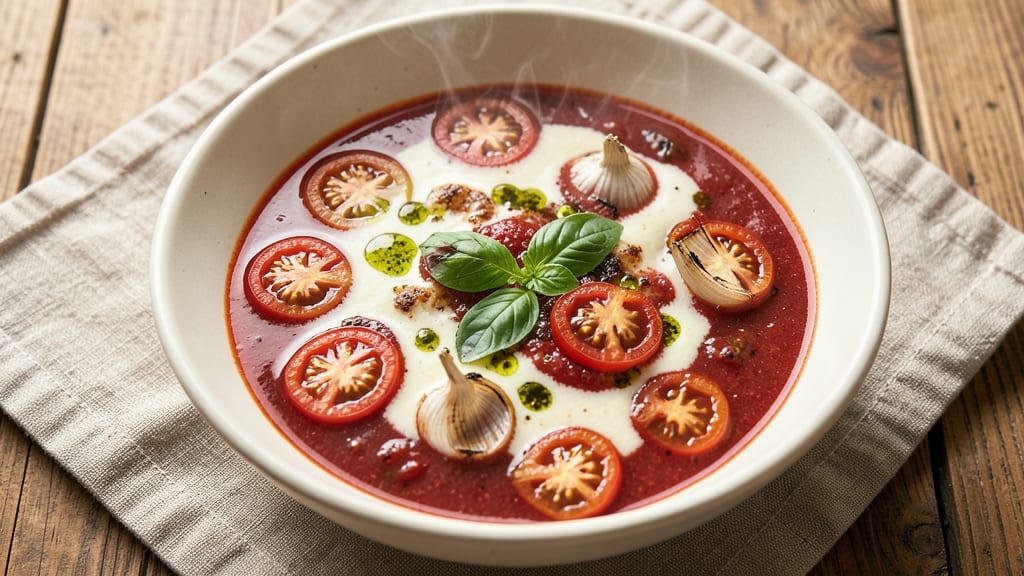
Rao’s tomato soup recipe delivers the rich, smoky depth that makes this dish legendary—slow-roasted garlic and tomatoes create a velvety, aromatic base that tastes like a slice of Italian tradition.
Standing on a step stool in my grandmother’s kitchen in Sicily, I learned how to transform simple ingredients into something extraordinary through patience and technique. The key lies in roasting the garlic and tomatoes until caramelized, which builds layers of flavor that no shortcut can replicate.
This professional approach transforms Rao’s into a restaurant-quality experience at home, requiring just a few simple ingredients and about 1 hour of hands-on time (plus simmering).
The smoky aroma alone will have everyone gathering around the kitchen, while the velvety texture and balanced acidity make it impossible to resist a second bowl. What begins as raw tomatoes and garlic becomes a symphony of flavors through careful roasting and slow simmering.
The result is a soup so deeply flavorful it feels like a hug in a bowl—smooth yet complex, with just the right balance of sweetness and acidity. Each spoonful delivers that unmistakable Rao’s signature, where the garlic’s depth and the tomatoes’ natural sweetness shine.
This isn’t just soup; it’s a celebration of Italian comfort food that belongs on any table, from family dinners to cozy weeknight meals.
Whether you’re recreating a childhood memory or introducing Rao’s to new generations, this method ensures professional results every time. The secret lies in the roasting process—don’t skip it. Let’s create something truly special together.
Ingredients for rao's tomato soup
Transform simple ingredients into restaurant-quality Rao's tomato soup through roasting and technique.
| Ingredient | Amount | Notes |
|---|---|---|
| Large Roma Tomatoes 🍅 | 2 lb | Halved for roasting |
| Whole Garlic Bulb 🧄 | 1 whole | Unpeeled for roasting |
| Extra-Virgin Olive Oil 🫒 | ½ cup | High-quality, fruity |
| Dry Red Wine 🍷 | 1 cup | Bold Cabernet Sauvignon |
| Chicken or Vegetable Broth 💧 | 4 cups | Homemade or quality low-sodium |
| Canned San Marzano Tomatoes 🍅 | 1 can | 28 oz, crushed |
| Fresh Rosemary 🌿 | ¼ cup | Chopped, stems removed |
| Fresh Thyme 🌿 | ¼ cup | Leaves only, stems removed |
| Granulated Sugar 🍬 | 1 tbsp | Balances acidity |
| Diamond Crystal Kosher Salt 🧂 | 1 tsp | Adjust to taste |
| Freshly Ground Black Pepper 🌶️ | ½ tsp | Freshly cracked |
| Parmesan Cheese 🧀 | ½ cup | Freshly grated |
| Heavy Cream 🥛 | ½ cup | Full-fat preferred |
The garlic and tomatoes are the foundation—San Marzano tomatoes deliver the sweetest flavor, while the garlic bulb must roast until caramelized for that signature depth. Whole Foods Market or specialty Italian markets carry the best quality, but any grocery store will work if you select firm, ripe Roma tomatoes. For the garlic, avoid pre-minced jars—the whole bulb roasts more evenly. The extra-virgin olive oil should be fruity and peppery, like California Olive Ranch or Bertolli. Fresh herbs matter here too—rosemary and thyme from the grocery store's refrigerated section (not dried) ensure vibrant flavor.
No red wine? Substitute with additional broth—just reduce the simmering time slightly. For a vegetarian version, mushroom broth works beautifully. If San Marzano tomatoes aren't available, plum tomatoes are your next best option, but avoid regular canned tomatoes—they lack the same sweetness. The heavy cream can be swapped for half-and-half if you prefer a lighter texture, though it won't be as rich. For extra depth, a splash of balsamic vinegar (1 tbsp) at the end adds complexity. The Parmesan cheese must be freshly grated—pre-shredded contains anti-caking agents that alter the texture.
Roasted garlic and tomatoes keep 3-4 days in the fridge, sealed in an airtight container. The finished soup reheats beautifully—simmer gently on the stove to preserve its velvety texture. For meal prep, portion into individual containers and freeze for up to 3 months. When reheating from frozen, add a splash of broth to prevent separation. The soup actually improves overnight as flavors meld—double the batch if you can, it's worth it.
Why You'll Love This Recipe
- No-Chop Nightmare: I swear by the whole garlic bulb trick—just smash those cloves with the flat side of a knife, no peeling required. The Roma tomatoes? Toss them in whole, skin and all, then pull them out later. That’s it. Minimal effort, maximum flavor.
- Wine-Infused Magic: That splash of dry red wine isn’t just for show—it deepens the tomato’s natural sweetness while cutting through the acidity. The olive oil finish? Rich without being heavy, like a warm hug in a bowl. Honestly, it tastes like a fancy restaurant dish, but I’m the one who made it.
- Meal Prep MVP: This soup thickens beautifully when reheated, so I make a big batch on Sundays. Pair it with crusty bread for lunch, or serve it over pappardelle for dinner. Even better? It’s vegetarian-friendly but still hearty enough for meat lovers.
- Budget-Friendly Luxury: Roma tomatoes and garlic bulbs are cheap, but they punch way above their weight. A single bottle of wine stretches across multiple batches, and broth? You can use store-bought or make your own scraps. Fancy flavors without the grocery shock.
Step-by-step instructions for Rao's tomato soup
This method builds complex flavor through careful roasting and layering—each step designed to maximize depth.
Roast Tomatoes and Garlic for Smoky Foundation
Preheat your oven to 400°F and line two baking sheets with parchment paper. Halve the 2 lb large roma tomatoes and peel the 1 whole garlic bulb but leave the cloves intact. Arrange the tomato halves cut-side up on one sheet and place the garlic bulb on the other. Drizzle both with 0.25 cup of the extra-virgin olive oil.
Roast for 30-35 minutes until the tomatoes collapse slightly and develop deep caramelized spots. The garlic should be soft and golden when pressed. This roasting step concentrates the tomato's natural sweetness and develops smoky notes essential for Rao's signature flavor. Let everything cool slightly before handling—hot garlic cloves release sulfurs that can burn your mouth.
Build the Base with Wine and Broth
In a large Dutch oven, heat the remaining 0.25 cup extra-virgin olive oil over medium heat. Add the roasted garlic cloves and cook for 1-2 minutes until fragrant. Remove and discard the skins, then add 0.25 cup chopped fresh rosemary and 0.25 cup fresh thyme leaves, cooking for 30 seconds until just aromatic.
Deglaze with the 1 cup dry red wine, scraping up any browned bits from the bottom. Let it reduce by half, then add the 4 cups chicken or vegetable broth and 1 can canned san marzano tomatoes. Stir in the roasted tomatoes, breaking them up slightly. Bring to a simmer and cook uncovered for 20 minutes to meld the flavors. The soup should smell rich and earthy—this is where the foundation takes shape.
Season and Simmer for Depth
Add the 1 tbsp granulated sugar, 1 tsp diamond crystal kosher salt, and 0.5 tsp freshly ground black pepper. Stir well and continue simmering for another 15 minutes until the soup thickens slightly. Taste and adjust seasoning—you may need an additional pinch of salt or sugar to balance the acidity from the tomatoes.
This simmering stage develops the soup's complexity. The sugar caramelizes slightly, while the herbs infuse their aromatic oils. The broth reduces enough to coat a spoon but remains silky rather than thick. If the soup becomes too concentrated, add a splash of water or broth to reach your preferred consistency.
Finish with Cream and Parmesan
Reduce heat to low and stir in the 0.5 cup heavy cream and 0.5 cup freshly grated parmesan cheese. Cook for an additional 5 minutes, stirring occasionally, until the cream is fully incorporated and the cheese has melted completely. The soup should be velvety with a glossy sheen—this indicates proper emulsification.
Real talk: don't rush this step. The cream needs time to temper properly, and the parmesan must melt smoothly. If the soup separates, whisk vigorously to re-emulsify. The final texture should be rich yet balanced, with the cream adding body without overpowering the tomato's natural acidity. The parmesan provides a salty, umami counterpoint that elevates the entire dish.
Rest and Serve with Confidence
Remove from heat and let the soup rest for 10 minutes before serving. This resting period allows flavors to fully integrate and prevents the cream from separating when served. Ladle into warm bowls and garnish with additional parmesan and a sprinkle of freshly cracked black pepper.
The soup should be vibrant red with visible tomato chunks, aromatic herbs, and a velvety sheen from the cream. Each spoonful should deliver layers of smoky roasted tomato, herbal depth, and creamy richness. For best results, serve immediately while the cream is still warm and the flavors are at their peak intensity.
Pro Tips For Making Rao'S Tomato Soup
- CHAR THE GARLIC RIGHT: Use a whole bulb of garlic—peel it first, then smash each clove with the side of your knife before adding it to the pot. I learned this the hard way: whole cloves take forever to soften, and you’ll end up with uneven flavor. Smashing them speeds up the process and ensures every bite gets that deep, caramelized punch.
- SWEAT THE TOMATOES LOW: After adding the Roma tomatoes, reduce heat to low and let them simmer uncovered for 10 minutes before adding wine or broth. This isn’t just about softening—it’s about breaking down the skins and letting the natural acids mellow out. Skip this, and your soup will taste sharp and underdeveloped.
- DEGLAZE WITH WINE—DON’T DROWN IT: Pour in the red wine gradually, letting each splash sizzle and reduce by half before adding more. This builds flavor layer by layer instead of just diluting the pot. I used to dump it all at once—big mistake. The wine’s acidity and alcohol need time to work their magic.
- SALT THE BROTH FIRST: Season the broth before adding it to the soup—about 1 teaspoon per cup. The wine and tomatoes will dilute the soup later, so you’ll need more salt than you think. Trust me, your taste buds will notice the difference if you wait until the end.
Troubleshooting this recipe
Burnt Garlic Rescue
If your roasted garlic turns black or bitter, don’t toss it! This happens when garlic over-roasts or burns. Simply remove the discolored outer layers and use the soft, golden cloves inside—they’ll still add sweetness and depth. I’ve salvaged many batches this way, especially when the oven runs hotter than expected.
Just 1-2 minutes over medium heat in olive oil after roasting can restore that mellow garlic flavor before adding it to the soup. 💡
Tomato Skin Stuck
Peeling roasted tomato skins can be stubborn, but here’s my trick: place the halved tomatoes in a bowl of ice water for 5 minutes after roasting. The skins will contract and slide right off.
If that fails, use a paring knife to gently scrape away any remaining bits—never force it, or you’ll tear the flesh. The goal is to keep those sweet, caramelized juices intact for the soup’s foundation. 🍅
Sour or Underseasoned Soup
If your finished soup tastes too acidic or bland, balance it with 1 tsp sugar or ½ tsp salt—but taste first! A splash of balsamic vinegar (1 tbsp) can also deepen the flavor without overpowering. For extra richness, stir in 1 tbsp unsalted butter while the soup simmers.
I’ve even added a pinch of red pepper flakes to cut through acidity while adding warmth. Remember: Rao’s soup should be vibrant, not one-dimensional. ✨
Lumpy or Grainy Texture
If your soup ends up lumpy, it’s likely from over-stirring the cream or parmesan too early. To fix it, blend the soup briefly with an immersion blender until smooth, then return it to the pot. For a rustic texture, strain the soup through a fine-mesh sieve before adding the cream.
If the parmesan clumps, melt it into the soup first over low heat while stirring constantly. The key is patience—let the cream temper gradually. 🥛
Cream Separation
Cream separating usually means the soup cooled too quickly or was stirred too vigorously. Whisk in 1 tbsp cold water while the soup is still warm to re-emulsify, then simmer gently for 2-3 minutes. For prevention, always stir the cream and parmesan over low heat and avoid boiling.
If the separation is minor, a quick pulse in a blender often fixes it. The goal is a silky, velvety finish—never a broken emulsion. 💫
Weak Flavor Profile
If your soup lacks depth, it’s likely under-seasoned or didn’t simmer long enough. Boost flavor by adding 1 extra garlic clove (roasted or raw), ½ tsp smoked paprika, or a pinch of MSG (just a tiny amount!).
For herbal depth, steep 1 bay leaf during simmering and remove before serving. I also recommend tasting the soup at each stage—adjusting early prevents blandness later. Rao’s soup should sing with complexity! 🎶
Nutrition facts
Frequently asked questions
Can I make Rao’s tomato soup without red wine?
The wine adds depth, but you can substitute with 1 cup additional broth or 1 cup vegetable stock. For extra richness, add 1 tbsp tomato paste to compensate for the missing acidity. The flavor won’t be identical, but it’ll still be delicious. Just reduce the simmering time by 5 minutes since there’s less liquid to evaporate.
How do I store Rao’s tomato soup?
Store in an airtight container in the fridge for up to 4 days. For freezing, portion into individual containers and freeze for 3 months. Thaw overnight in the fridge—never at room temperature. When reheating, warm gently on the stove to preserve the velvety texture. The soup actually improves overnight as flavors meld!
What’s the secret to getting that restaurant-quality Rao’s texture?
The key is roasting the garlic and tomatoes until deeply caramelized, then simmering the soup uncovered to develop concentration. The cream must be added at low heat and stirred gently to avoid breaking the emulsion. For extra silkiness, blend briefly with an immersion blender before serving. Never boil the cream—this causes separation.
Can I use dried herbs instead of fresh?
Fresh herbs are ideal for vibrant flavor, but if you must use dried, reduce the amount to 1/3 of what’s listed (so 1/8 tsp each for rosemary and thyme). Dried herbs lose potency, so add them 10 minutes earlier during simmering. For best results, toast the dried herbs in the pot for 30 seconds before adding liquid to wake up their flavor.
How do I know when the roasted tomatoes are ready?
They’re done when they’ve collapsed slightly and developed deep caramelized spots. The edges should be slightly charred while the centers remain tender. Press a tomato gently—it should yield easily. Over-roasting makes them bitter, while under-roasting leaves them bland. Aim for 30-35 minutes at 400°F for perfect results.