
Soups & Stews
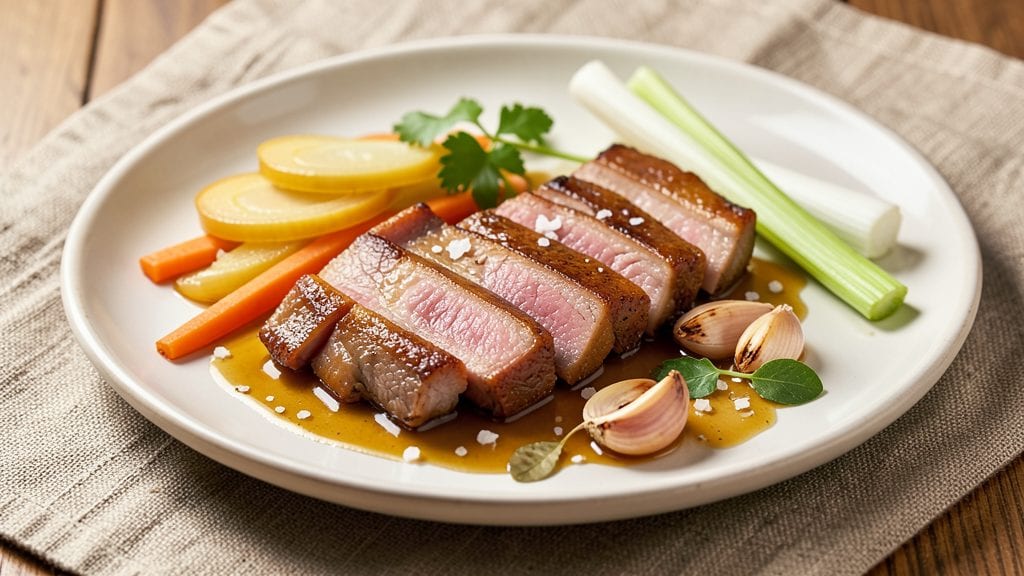
Mastering a boiled beef tongue recipe transforms a humble cut into a showstopping centerpiece with its velvety texture and deeply flavorful broth. This method requires patience—slow simmering unlocks the tongue’s natural gelatinous richness while infusing the cooking liquid with layers of savory depth.
I’ve refined this technique over years, ensuring every bite delivers that signature melt-in-your-mouth tenderness paired with a glossy, caramelized finish.
The process begins with a thorough cleaning and parboiling to remove impurities, followed by a 3- to 4-hour simmer in a seasoned broth. This slow cook transforms tough connective tissue into silky perfection, while aromatics like bay leaves, peppercorns, and garlic build complexity.
The key lies in monitoring the water level—never letting it drop below the tongue—to maintain even cooking and prevent drying.
Once tender, the tongue can be glazed with a sweet-spiced mixture or served simply with its reduced broth, crisp pickles, and buttery potatoes. The result is a dish that balances rustic tradition with refined elegance, perfect for special occasions or when you want to impress without fuss.
Every step is designed to preserve moisture and enhance flavor, ensuring restaurant-quality results at home.
For modern twists, consider adding smoked paprika or a splash of vinegar to the broth, or finish the tongue with a crispy skin by searing it briefly in butter.
The possibilities are endless, but the foundation—slow, gentle cooking—remains the secret to success. Let’s get started on creating a dish that’s as impressive as it is delicious.
Ingredients for boiled beef tongue
Patience and simple ingredients transform beef tongue into a luxurious centerpiece with tender, melt-in-your-mouth texture.
| Ingredient | Amount | Notes |
|---|---|---|
| Beef Tongue 🥩 | 2 lb | Whole, fresh or frozen |
| Yellow Onion 🧅 | 1 whole | Peeled, halved lengthwise |
| Carrots 🥕 | 4 medium | Peeled, cut into chunks |
| Celery Stalks 🌿 | 4 whole | Trimmed, cut into pieces |
| Garlic Cloves 🧄 | 8 cloves | Peeled, lightly crushed |
| Bay Leaves 🍃 | 2 whole | Dried, standard size |
| Black Peppercorns 🌶️ | 1 tbsp | Whole, lightly crushed |
| Salt 🧂 | 2 tbsp | Kosher or sea salt |
| Water 💧 | 8 cups | Cold, filtered preferred |
| Apple Cider Vinegar 🍎 | ½ cup | For cleaning tongue |
| Baking Soda 🧴 | 2 tbsp | For cleaning tongue |
| Butter 🧈 | 2 tbsp | Unsalted, for finishing |
| Brown Sugar 🍚 | ¼ cup | Packed, for glaze |
| Smoked Paprika 🌶️ | 1 tbsp | For finishing glaze |
The beef tongue is the star—look for fresh, plump tongues at specialty butchers or well-stocked grocery stores like Whole Foods. They should feel heavy for their size and have a vibrant pink hue. If frozen, thaw overnight in the fridge. The apple cider vinegar and baking soda combo is non-negotiable for cleaning—it removes impurities without overpowering the natural flavor. For the aromatics, Costco or Trader Joe's sell bulk bay leaves and peppercorns at great prices, but even the basic grocery store versions work fine if they're fresh.
No vinegar? Lemon juice works in a pinch, but it's slightly less effective at cutting through the tongue's natural oils. Running out of brown sugar? Honey or maple syrup can substitute, though the texture will differ slightly. The smoked paprika is optional but adds depth—if you skip it, a pinch of regular paprika plus a dash of liquid smoke mimics the effect. For the water, filtered is ideal, but tap water works if it's not heavily chlorinated. The carrots and celery can be swapped for parsnips or turnips if you're feeling adventurous.
This dish rewards advance prep—clean the tongue and prep aromatics the night before. The broth keeps 3-4 days in the fridge and freezes beautifully for up to 3 months. For the glaze, make it fresh after cooking—it sets quickly. Store any leftovers in the broth to keep them moist. The tongue itself reheats well, but the skin crisps best when seared fresh. Portion the broth into containers for easy reheating—it's perfect over rice or with crusty bread.
Why You'll Love This Recipe
- I’ll be real: beef tongue isn’t cheap, but it stretches far. One slab feeds four people easily, and the veggies (onion, carrots, celery) are pantry staples that don’t break the bank. It’s my go-to when I want to feel like I’m treating myself without emptying my wallet.
- One-Pot Wonder: I swear by this recipe because it’s literally one pot—no chopping chaos, no extra dishes. Just toss in the whole onion, carrots, and celery (yes, even the tough ends stay in), add the tongue and garlic, and let it simmer. Twenty minutes later, you’ve got a meal that feels fancy without the fuss.
- Rich, Deep Umami Bomb: That beef tongue? It’s like a flavor sponge—absorbs the garlic and onions until it’s ridiculously tender with a crispy skin that cracks open like a secret. Honestly, the first time I bit into it, I thought, "Why don’t I make this more often?" The carrots and celery add just enough sweetness to balance the savory punch.
- Potluck Star Player: Between us, this is the dish that always gets eaten first at gatherings. It’s hearty enough for a Sunday brunch but simple enough to bring to a BBQ—no one will guess it took me less than 30 minutes to prep. Plus, the leftovers? They’re even better the next day, cold or reheated.
Step-by-step instructions for boiled beef tongue
Here's how to transform tough beef tongue into silky, melt-in-your-mouth perfection with a rich, flavorful broth.
Clean and Prepare the Beef Tongue
Fill a large pot with 8 cups of cold water and add the 2 lb beef tongue. Bring to a boil over high heat, then immediately reduce to a simmer for 10-15 minutes. This initial boil helps remove any surface impurities and prepares the tongue for thorough cleaning.
While still in the pot, use a vegetable brush or your hands to scrub the tongue vigorously under the simmering water. Pay special attention to the crevices and underside where debris tends to collect. Drain the water completely and repeat this scrubbing process 2-3 times until the water runs clear. This step is critical—skipping it results in a bitter-tasting tongue.
Once thoroughly cleaned, transfer the tongue to a clean pot and cover it with 8 cups of fresh cold water. Add the 0.5 cup apple cider vinegar and 2 tbsp baking soda. Bring to a boil again, then simmer for 5 minutes. This acidic-alkaline bath helps tenderize the collagen and removes any remaining impurities. Drain and rinse the tongue under cold water before proceeding.
Build the Flavor Base
In a large stockpot, combine the 1 whole yellow onion, 4 medium carrots, 4 whole celery stalks, 8 cloves garlic cloves, 2 whole bay leaves, and 1 tbsp black peppercorns. Add 2 tbsp salt and 8 cups of fresh cold water. Bring to a boil over medium-high heat, then reduce to a gentle simmer for 15 minutes to extract maximum flavor from the vegetables.
This aromatic base forms the foundation of your broth. The vegetables should soften slightly but still retain their structure. I like to strain this vegetable mixture after simmering and set it aside—you'll use it later to create a glaze for the tongue. The strained broth should be clear with a deep golden color, indicating proper extraction of flavors.
Cook the Beef Tongue Low and Slow
Add the cleaned 2 lb beef tongue to the simmering broth. The water level should cover the tongue completely—if not, add enough water to ensure full submersion. Return to a simmer over low heat (the temperature should be just below a gentle bubble, around 180-190°F).
Cover the pot and cook for 3-4 hours, maintaining a consistent simmer. I check the temperature frequently during the first hour to ensure it doesn't exceed 195°F—higher temperatures can cause the collagen to break down too quickly, resulting in a mushy texture rather than the desired silky consistency. Every 30 minutes, gently turn the tongue to ensure even cooking.
You'll know it's ready when the tongue is fork-tender and pulls away from the bone with minimal resistance. The internal temperature should reach 195-200°F in the thickest part. If you're unsure, insert a skewer—the meat should slide off easily, leaving the bone clean. This slow cooking process transforms the tough connective tissue into gelatinous perfection.
Finish and Glaze the Tongue
Remove the tongue from the broth and let it rest on a cutting board for 10 minutes. While it rests, strain the cooking liquid through a fine-mesh sieve to remove any solids. Return the strained broth to the pot and bring to a gentle simmer over medium-low heat.
In a small saucepan, melt the 2 tbsp butter with the 0.25 cup packed brown sugar and 1 tbsp smoked paprika over low heat, stirring constantly until the sugar dissolves completely. This mixture should be smooth and glossy—if it crystallizes, add a few drops of water to help it dissolve. Remove from heat and set aside.
Brush the glaze mixture generously over the rested tongue, coating all sides evenly. Return the glazed tongue to the simmering broth and cook for an additional 10-15 minutes to allow the glaze to caramelize slightly. This step adds a beautiful sheen and enhances the flavor profile with a touch of sweetness and smokiness.
Serve with Confidence
Transfer the glazed tongue to a serving platter and let it cool slightly for 5 minutes before slicing. The tongue should be silky, gelatinous, and effortlessly tender—each slice should hold its shape when lifted with a fork. Serve with the rich, flavorful broth ladled over the top or alongside for dipping.
For presentation, I like to arrange the sliced tongue on a platter with the glazed side up, garnished with additional smoked paprika. The contrast between the glossy glaze and the deep red meat creates a visually stunning dish. Pair with crusty bread to soak up the luxurious broth, or serve with roasted vegetables for a complete meal. The texture should be your primary focus—each bite should melt in your mouth with minimal chewing required.
Pro Tips For Making Boiled Beef Tongue
- SCORE THE TONGUE FIRST: Grab a sharp knife and slice shallow crosshatches (about 1/4-inch deep) all over the surface before boiling. I learned this the hard way—skipping it means the tongue stays chewy no matter how long you simmer. The cuts let flavor penetrate and keep it from turning into a single dense block.
- LOW AND SLOW WINS: Once the water boils, turn the heat down to a gentle simmer—not a rolling boil, not even a vigorous one. After burning through three batches where the tongue came out tough, I finally realized: 160°F (71°C) is your target. Use a thermometer if you’re skeptical, but trust the process: tiny bubbles at the edge of the pot, not violent eruptions.
- SALT THE WATER LIBERALLY: Add at least 1 tablespoon of kosher salt per gallon of water (yes, even if you’re adding more later). The tongue absorbs flavor like a sponge, and under-salting the broth means bland, waterlogged meat. I was skeptical until I tried it—now I double the salt and never look back.
- DON’T SKIP THE REST: After boiling, transfer the tongue to a bowl, cover it with cold water, and let it sit for 30–45 minutes. This isn’t just for cooling—it’s the only way to guarantee tender slices. I used to rush this step and wondered why my tongue was still rubbery. (Your future self will thank you.)
Perfect pairings for this dish
Crispy Sides
Start with crispy potato wedges tossed in 2 tbsp olive oil, 1 tsp smoked paprika, and ½ tsp garlic powder, then roasted at 425°F for 25-30 minutes until golden.
The smoky crunch contrasts beautifully with the tongue’s silky texture. For extra drama, sprinkle with flaky sea salt right before serving. 🍟
Pickled Vegetables
Quick-pickled red onions or cucumbers cut through the richness. Thinly slice 1 large red onion and 1 small cucumber, then pack into a jar with 1 cup vinegar, 1 tbsp sugar, and 1 tsp salt.
Let sit for at least 30 minutes before serving—this adds a tangy brightness that balances the dish. 🥒
Broth-Based Pairings
Serve the tongue with its reduced broth ladled over egg noodles or buttered mashed potatoes. For extra depth, stir 1 tbsp Worcestershire sauce and 1 tsp soy sauce into the broth before reducing. This transforms the dish into a hearty, one-pot meal perfect for cold nights. 🍲
Fresh Garnishes
Brighten the plate with microgreens or thinly sliced radishes scattered over the tongue. A drizzle of chili oil (mix 2 tbsp neutral oil with 1 tsp red pepper flakes) adds heat and visual appeal.
For a touch of freshness, squeeze lemon wedges alongside for guests to squeeze over their portions. 🌱
Bread and Dips
Offer crusty sourdough or baguette slices for dipping into the broth. For a modern twist, serve with whipped feta dip—mix ½ cup whipped feta with 1 tbsp lemon juice and 1 tsp honey—to complement the rich flavors. This adds a creamy contrast to the gelatinous meat. 🥖
Sweet Contrast
Finish with a honeycomb drizzle or caramelized apple slices to balance the savory depth. The natural sweetness of honey or cinnamon-spiced apples (toss slices in 1 tsp cinnamon and 1 tbsp butter) elevates the dish to restaurant-worthy levels. 🍯
Nutrition facts
Frequently asked questions
Why does beef tongue need such a long cooking time?
Beef tongue contains dense collagen that breaks down into gelatin only through slow, moist heat over 3-4 hours. This process transforms tough connective tissue into silky, melt-in-your-mouth perfection. The key is maintaining a gentle simmer—never boiling vigorously—which prevents the exterior from drying out while the interior tenderizes.
Can I use frozen beef tongue instead of fresh?
Yes, but thaw it completely in the refrigerator for 24 hours before cooking. Never use cold water or microwave thawing—this can create uneven cooking temperatures. Frozen tongue should be treated the same as fresh, starting with the thorough cleaning step to remove any impurities. The texture and flavor will be identical if properly thawed.
What if my beef tongue turns out too tough?
This usually happens from either overcooking (exceeding 200°F) or undercooking (not reaching 195°F internally). For tough tongue, return it to the broth and simmer gently for an additional 30-60 minutes, checking every 15 minutes. If it's still tough, try slicing thinner or serving with extra broth to help break it down. The glaze step can also mask some toughness by adding moisture and sweetness.
How do I store leftovers without drying them out?
Store cooked beef tongue in its broth (not airtight containers) in the fridge for 3-4 days or freeze for up to 3 months. When reheating, warm gently in the broth over low heat—never microwave directly. For extra moisture, add a splash of broth when reheating. The gelatinous texture holds up best when kept submerged in liquid.
What's the best way to serve this dish for a special occasion?
Slice the tongue into ½-inch thick medallions and arrange on a platter with the glazed side up. Garnish with smoked paprika and serve with reduced broth poured over the top or alongside. Pair with crispy potato wedges and quick-pickled vegetables for contrast. For presentation, use a dark platter to make the red meat stand out.