
Appetizers
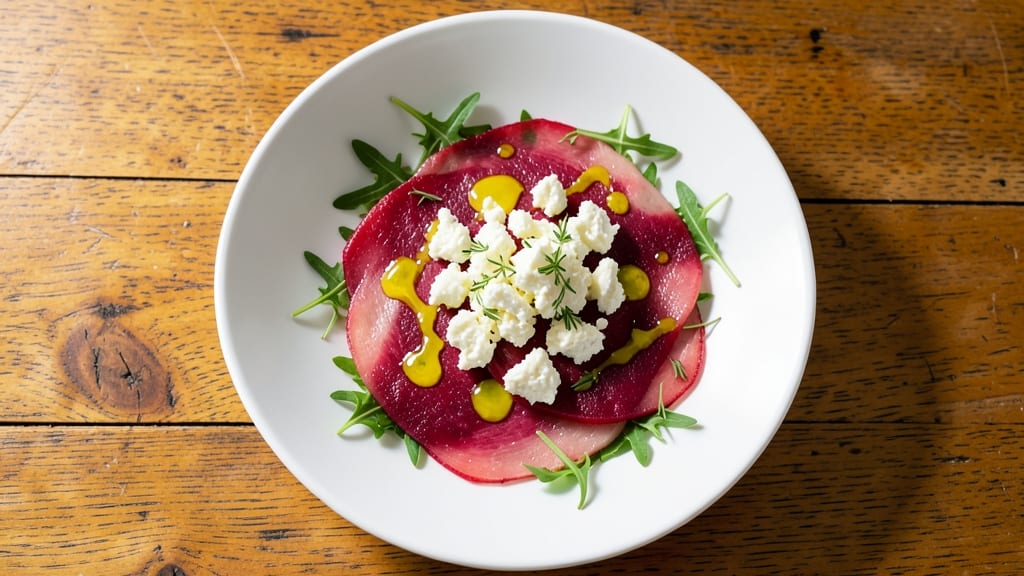
This beet carpaccio with goat cheese recipe transforms raw beets into delicate slices, paired with creamy goat cheese for a dish that’s both elegant and irresistibly flavorful.
This beet carpaccio with goat cheese recipe combines vibrant colors, earthy sweetness, and creamy texture for an appetizer that feels both elegant and approachable. The key lies in perfectly thin slices and a bright vinaigrette that enhances rather than overpowers the natural flavors.
What sets this dish apart is the balance of textures—crisp beet slices, crumbly goat cheese, and fresh herbs create each bite with contrast. Using a mandoline ensures uniform slices, while a simple lemon-honey vinaigrette adds brightness without competing with the beets' natural sweetness.
The recipe builds on classic carpaccio techniques but adapts them for beets' unique characteristics.
By the time you arrange the final plate, you'll have a presentation that's restaurant-worthy yet simple to assemble at home. The earthy beets pair beautifully with the tangy goat cheese, while toasted nuts or microgreens add an extra layer of sophistication.
This dish proves that refined appetizers don't require complicated techniques—just precise execution and thoughtful presentation.
Perfect for spring entertaining or as an impressive starter for dinner parties, this beet carpaccio makes the most of seasonal ingredients. The recipe scales easily for crowds while maintaining its delicate balance of flavors. Let's create this visually striking appetizer that's sure to impress your guests.
Ingredients for beet carpaccio with goat cheese
Fresh beets, creamy goat cheese, and bright herbs create this refined appetizer's perfect balance.
| Ingredient | Amount | Notes |
|---|---|---|
| Medium Beets 🍠 | 2 whole | Cooked until tender, peeled |
| Extra-Virgin Olive Oil 🫒 | ½ cup | High-quality, fruity variety |
| Fresh Goat Cheese 🧀 | 8 oz | Crumble-style, room temperature |
| Fresh Arugula 🌱 | 2 cups | Baby leaves preferred |
| Fresh Thyme Leaves 🌿 | ¼ cup | Finely chopped, stems removed |
| Fresh Lemon Juice 🍋 | 2 tbsp | Freshly squeezed, strained |
| Raw Honey 🍯 | 1 tbsp | Light floral variety |
| Diamond Crystal Kosher Salt 🧂 | ½ tsp | Fine grain preferred |
| Freshly Cracked Black Pepper 🌶️ | ¼ tsp | Coarsely ground |
| Toasted Walnuts 🥜 | ½ cup | Chopped, lightly toasted |
| Mandoline Slicer ✂️ | 1 whole | For uniform 1/16-inch slices |
| Microgreens 🌱 | ¼ cup | Optional garnish |
| Balsamic Glaze 🍷 | 1 tbsp | Reduction, for drizzling |
The beets are the foundation—choose deep red varieties for their rich color and natural sweetness. Whole Foods Market or local farmers markets often carry the most vibrant options, especially in late summer and fall. Avoid pre-cooked vacuum-packed beets; they lack the freshness of roasted ones. Cook them whole in their skins until tender (about 45 minutes at 375°F), then cool before peeling. The mandoline slicer is non-negotiable for uniform slices—1/16-inch thickness ensures perfect texture without mushiness. For presentation, arrange slices in concentric circles on chilled plates.
Goat cheese should be room temperature and crumbled by hand—never pre-shredded, which contains anti-caking agents that alter the texture. Substitute with feta or ricotta salata if needed, though goat cheese's tang is ideal. Fresh thyme can be swapped for basil or tarragon at equal amounts, but thyme's earthy note complements the beets beautifully. The walnuts add crunch; pecans or hazelnuts work equally well if toasted to the same golden-brown stage. For the vinaigrette, lemon juice must be fresh—bottled versions lack the brightness needed to cut through the beets' richness. Adjust honey to taste, but remember it should enhance, not dominate.
Assemble the carpaccio immediately before serving to maintain crispness—beets oxidize quickly. Store pre-sliced beets in airtight containers with lemon juice for up to 2 days, though texture degrades after 12 hours. The goat cheese keeps 1 week refrigerated, while herbs last 5 days wrapped in damp paper towels. For make-ahead convenience, pre-toast nuts and store them separately. The balsamic glaze can be made 1 week ahead and reheated gently before drizzling. This dish shines at room temperature, so remove from the fridge 30 minutes before serving for optimal presentation.
Why You'll Love This Recipe
- No-Cook Magic: I swear, this dish is one of those rare recipes where you do almost nothing and still end up with something that looks like you slaved over it. Just slice those beets thin, drizzle with olive oil, and let the goat cheese and thyme work their charm—no oven, no fuss.
- Weeknight or Wow Factor: Between us, this is my go-to when I have friends over unexpectedly or when I’m too tired to cook but don’t want to serve sad takeout. It’s light enough for summer but hearty enough for a dinner party—just pile it on a plate, add a sprinkle of flaky salt, and boom. Instant crowd-pleaser.
- Budget Bright Spot: I buy beets in bulk when they’re on sale, roast a big batch, and keep them in the fridge for days. A few slices, some goat cheese, and a handful of arugula turn into a meal that costs next to nothing but feels like a splurge. Plus, the leftovers? Still delicious cold the next day.
Step-by-step instructions for beet carpaccio with goat cheese
This refined technique transforms humble beets into delicate slices with perfect texture and balance.
Cook and Prepare the Beets
Preheat your oven to 375°F. Wrap the 2 whole medium beets tightly in aluminum foil and place them directly on the oven rack. Roast for 45-50 minutes until completely tender when pierced with a fork. The beets should yield easily and feel soft throughout.
Once cooked, remove from the oven and let cool for 10 minutes before handling. Using a sharp peeler, carefully remove the skins - they should slide off easily now that the beets have cooled slightly. The peeling process reveals their vibrant magenta flesh, essential for creating that restaurant-quality presentation. Set the peeled beets aside to cool completely at room temperature before slicing.
Create the Herb Dressing
In a small bowl, combine the 0.5 cup extra-virgin olive oil, 2 tablespoons fresh lemon juice, 1 tablespoon raw honey, 0.25 cup finely chopped fresh thyme leaves, 0.5 teaspoon diamond crystal kosher salt, and 0.25 teaspoon freshly cracked black pepper. Whisk vigorously until fully emulsified - you should see the mixture transform from separate ingredients to a smooth, cohesive dressing.
Taste and adjust seasoning if needed. The dressing should be bright, slightly sweet, and herby with a proper balance of acidity. This herb-infused oil will be the signature element that elevates the simple beet slices into an elegant dish. Let the dressing sit at room temperature for 15 minutes to allow the flavors to meld completely.
Slice the Beets with Precision
Using the mandoline slicer, carefully slice the cooled beets into 1/16-inch thick slices. Work with one beet at a time, keeping the slices in a single layer on a clean kitchen towel to prevent them from sticking. The mandoline will create perfectly uniform slices that reveal the beet's beautiful concentric rings when stacked.
Arrange the slices in overlapping rows on a large serving platter, creating a visually appealing pattern. The overlapping technique mimics traditional carpaccio presentation while maximizing surface area for the dressing. Work quickly to prevent the beets from drying out - their natural moisture will keep them fresh while you prepare the other components.
Assemble and Garnish
Spread the 2 cups fresh arugula evenly over the beet slices, pressing gently to create an even green base. In a small bowl, crumble the 8 ounces fresh goat cheese into small, irregular pieces. Scatter these crumbles evenly over the arugula, creating visual contrast with the vibrant beets below.
Drizzle the herb dressing generously over the entire preparation, allowing it to pool slightly in the spaces between the beet slices. Sprinkle the 0.5 cup toasted walnuts and 0.25 cup microgreens over the top for added texture and color contrast. Finally, finish with a delicate drizzle of 1 tablespoon balsamic glaze, allowing it to create elegant patterns across the dish.
Serve Immediately
This dish should be served immediately to maintain the perfect texture contrast between the crisp arugula, tender beets, and creamy goat cheese. The herb dressing should be visible throughout, with the beets absorbing just enough to enhance their natural sweetness without becoming soggy.
For presentation, serve on a large platter with individual plates nearby. Each guest can assemble their own portion, creating a communal dining experience. The final dish should showcase vibrant colors, contrasting textures, and a perfect balance of earthy beet flavor, herby dressing, and creamy goat cheese.
Pro Tips For Making Beet Carpaccio With Goat Cheese
- Peel Beets Cold: I learned this the hard way—warm beets turn to mush when sliced. Run them under cold water after roasting to stop the cooking, then peel while still cool. The skins slide off like butter, and your carpaccio stays crisp.
- Salt the Goat Cheese: Fresh goat cheese is mild but needs a little push. Sprinkle a pinch of flaky salt (like Maldon) and let it sit for 5 minutes before crumbling over the beets. It’ll soften slightly and taste richer—trust me, it’s not just for flavor.
- Don’t Overcrowd the Arugula: Pile too much arugula on top, and it wilts into sad, soggy greens. Tear it into rough handfuls and scatter lightly over the beets, then drizzle the olive oil in a zigzag—this keeps it crisp and lets the flavors shine.
- Roast Beets at 400°F: Too low, and they turn out mealy; too high, and they burn before cooking through. 400°F is the sweet spot—about 45 minutes for medium beets. Pierce them first with a fork, or they’ll explode like tiny grenades (yes, it’s happened).
Flavor customization for this dish
Sweet & Tangy Twist
Swap the honey for 1 tbsp fig jam (like Bertolli) and add 1 tsp orange zest to the dressing for a sophisticated sweet-tart balance. The fig jam adds depth while the citrus brightens the earthy beets. Garnish with toasted pine nuts instead of walnuts for a more refined texture.
Spicy Heat Version
Incorporate ½ tsp smoked paprika and ¼ tsp cayenne into the herb dressing for subtle warmth. Add crumbled chorizo (about 2 oz) to the goat cheese mixture for a smoky, spicy kick. Top with pickled red onions for acidity that cuts through the richness.
Citrus-Infused Dressing
Replace the lemon juice with 2 tbsp grapefruit juice and add 1 tsp grated Meyer lemon peel to the dressing. The grapefruit's bitterness enhances the beets' natural sweetness while adding a refreshing zing. Pair with toasted almonds and a sprinkle of orange zest for a vibrant presentation.
Herb Variations
Experiment with different herbs in the dressing: ½ cup chopped dill adds a bright, almost cucumber-like freshness, while ½ cup chopped tarragon brings an anise-like sophistication. For a Mediterranean twist, use ½ cup chopped parsley and ¼ cup chopped basil together for a classic Italian flavor profile.
Cheese Alternatives
For a tangier option, use feta cheese instead of goat cheese—crumble 6 oz and drizzle with 1 tsp olive oil to soften slightly. For a creamier texture, try ricotta salata, which holds its shape better when crumbled.
Both options work beautifully with the beet's earthy flavor while adding their own unique tang.
Nutty Crunch Options
Toast ½ cup pecans for a richer, buttery flavor or ½ cup hazelnuts for a slightly sweeter crunch. For a nut-free option, use toasted pumpkin seeds—they add a subtle earthiness that complements the beets perfectly. Always toast nuts and seeds until golden-brown for maximum flavor and texture.
Nutrition facts
Frequently asked questions
Can I use raw beets instead of roasted for this beet carpaccio?
While traditional carpaccio uses raw meat, beets are much better roasted first. Raw beets are too fibrous and bitter for delicate slicing. Roasting at 375°F for 45-50 minutes transforms their texture into tender, naturally sweet slices perfect for this dish. The roasting process also intensifies their natural color, making the presentation even more stunning.
What's the best way to prevent beet slices from turning brown?
Beets oxidize quickly after slicing, turning brown. To prevent this, immediately place slices on a plate and drizzle with a little lemon juice or arrange them on a bed of arugula (which contains natural acids). Work quickly and keep everything chilled until serving. For extra insurance, store pre-sliced beets in airtight containers with paper towels soaked in lemon water.
How do I adjust this recipe for a vegan version?
Replace the goat cheese with vegan feta or crumbled cashew-based ricotta. For the dressing, use maple syrup instead of honey and ensure your olive oil is certified vegan. Add toasted pumpkin seeds or walnuts for texture. The dish will maintain its elegant presentation while becoming completely plant-based.
Can I make this beet carpaccio ahead of time?
While the final assembly should be done last minute, you can prep components ahead. Roast and slice beets 1 day ahead, storing them in airtight containers with lemon juice. Make the dressing 2 days ahead and refrigerate. Assemble everything just before serving to maintain crisp textures. The goat cheese should be crumbled fresh for the best texture.
What's the best way to slice beets without a mandoline?
If you don't have a mandoline, use a sharp chef's knife and place the beet on a cutting board. Hold the knife at a 15-degree angle and make thin, even slices (about 1/16-inch) by rocking the knife gently. Work with one beet at a time and keep slices in a single layer on a damp towel to prevent sticking. While not as uniform as a mandoline, this method still creates beautiful slices for your presentation.