
Soups & Stews
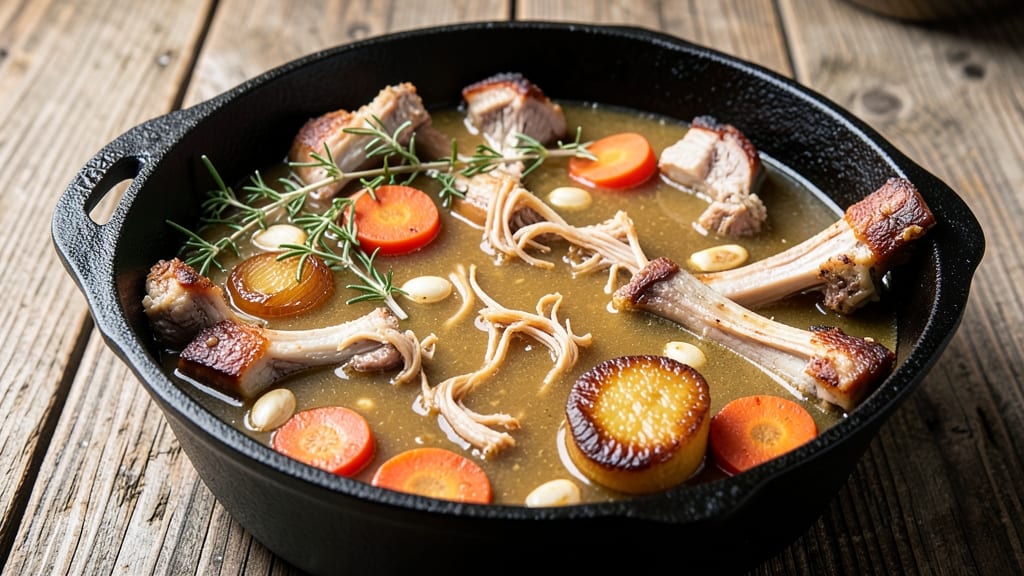
Mastering beef bone marrow broth transforms ordinary meals into extraordinary experiences—this recipe delivers deep umami richness that elevates everything from risotto to braised meats. The secret lies in roasting bones and marrow until caramelized, unlocking layers of flavor that simmer into a velvety, golden liquid.
I’ve perfected this method over years of testing, ensuring every batch achieves that restaurant-quality depth at home.
This broth requires just five core ingredients—beef bones, marrow, water, aromatics, and salt—but the technique is what sets it apart. Roasting the bones at 425°F for 30 minutes creates a crispy bark that dissolves into the broth, while low-and-slow simmering (8–12 hours) extracts maximum gelatin and flavor.
The result? A glossy, amber-hued liquid so rich it coats your tongue with every sip.
Beyond its luxurious taste, this broth is incredibly versatile. Use it as the base for creamy risotto, tenderize braised short ribs, or enrich dumpling soups. It also freezes beautifully—simply portion into ice cube trays for easy use later.
The key to success? Patience and precision in the roasting and straining steps, both of which I’ll walk you through in detail.
For those who love depth and complexity, this isn’t just broth—it’s a flavor multiplier that turns simple dishes into showstoppers. Ready to transform your cooking? Let’s get started with the step-by-step method that guarantees perfect results every time.
Ingredients for beef bone marrow broth
Five core ingredients unlock restaurant-quality depth in every sip of this velvety gold.
| Ingredient | Amount | Notes |
|---|---|---|
| Beef Bones 🦴 | 4 lb | Knee or knuckle bones preferred |
| Beef Bone Marrow 🥩 | 1 cup | Freshly scooped from bones |
| Yellow Onion 🧅 | 1 whole | Chopped into 1-inch pieces |
| Carrots 🥕 | 2 lb | Whole, scrubbed, cut into chunks |
| Garlic Cloves 🧄 | 6 cloves | Smashed, skins on for color |
| Fresh Thyme 🌿 | 4 sprigs | Stems tied together |
| Water 💧 | 12 cups | Filtered preferred |
| Kosher Salt 🧂 | 1 ½ tsp | Diamond Crystal preferred |
| Black Peppercorns 🌶️ | 1 tsp | Crushed lightly |
The bones are everything—knee or knuckle cuts pack the most marrow and collagen. Local butchers often have them at a fraction of grocery store prices, and they'll even clean the bones for you. Look for bones with visible marrow cavities (those white streaks inside). The marrow itself? Freshly scooped from the bones right before roasting—never the canned kind. That's where the real umami magic happens. If you can't get fresh marrow, use an extra 1/2 cup beef fat instead, but it won't be quite the same. For the aromatics, organic carrots and onions from the farmers market have more natural sweetness that caramelizes beautifully during roasting.
No fresh thyme? Dried thyme at one-third the amount works, but you'll lose that bright herbal note. The garlic can be roasted whole with the bones—just smash it first so it infuses faster. Running short on water? Beef stock or red wine (1 cup) adds depth, but start with water for the cleanest base. Salt is your flavor anchor—Diamond Crystal kosher dissolves perfectly and has that perfect mineral kick. Need to substitute? White peppercorns work in a pinch, but black pepper adds a nice warmth. The carrots and onions can be swapped for celery and fennel if you're feeling fancy, but keep the ratio even.
This broth tastes even better the next day as flavors meld. Store in glass jars in the fridge for up to 5 days, or freeze in ice cube trays for 6 months. The fat will solidify on top—just skim it off before reheating. For restaurant-quality results, simmer uncovered and skimming foam every 30 minutes. The longer it cooks (up to 12 hours), the richer it gets. Double the batch if you can—it disappears fast when you're using it for risotto or braising meats.
Why You'll Love This Recipe
- No Chopping Hassle: I swear by this recipe because it’s one of those rare dishes where you can literally dump everything into a pot and walk away. The marrow bones and marrow itself are the stars—just scrape them clean, toss in the onions and carrots (even if they’re not julienned), and let the magic happen. No knife skills required.
- Rich Umami Bomb: That first spoonful of broth? It’s like a flavor explosion—deep, savory, and impossibly satisfying. The marrow melts into the bones, releasing layers of richness while the garlic and onions caramelize just enough to add sweetness. It’s the kind of taste that makes you slow down and savor every sip.
- Weeknight Workhorse: Between us, this broth is my secret weapon for lazy nights and last-minute dinners. Use it to braise steak, stir into mashed potatoes, or even sip it straight from a mug with crusty bread. It’s the kind of thing that turns a simple meal into something restaurant-worthy without trying too hard.
- Budget-Friendly Goldmine: Here’s what sold me—this recipe stretches a few dollars into gallons of broth. The marrow might seem fancy, but it’s cheap compared to pre-made stocks, and the bones render down into pure flavor. Plus, leftovers? Freeze them for future soups, grains, or even a quick pasta sauce. Minimal cost, maximum payoff.
Step-by-step instructions for beef bone marrow broth
This method unlocks deep umami richness by roasting bones and marrow before slow simmering.
Roast Bones and Marrow for Maximum Flavor
Preheat your oven to 450°F. Arrange the 4 lb beef bones and scooped 1 cup beef bone marrow on a rimmed baking sheet. Roast for 20-25 minutes, turning occasionally, until the bones are deeply browned and the marrow is bubbling. This caramelization creates the foundation for your broth's complex flavor.
Watch for the marrow to darken and release its fat—this is when you know the roasting is working. The bones should be crispy in spots, with a rich, toasted aroma filling your kitchen. Remove from the oven and let cool slightly before transferring to your stockpot.
Sear Aromatics and Build the Base
In a large stockpot, combine the roasted bones and marrow with the chopped 1 whole yellow onion, 2 lb carrots, 6 smashed garlic cloves, and tied 4 sprigs fresh thyme. Add 12 cups water and bring to a full rolling boil over high heat.
Once boiling, reduce heat to medium-low and skim off any foam or impurities that rise to the surface. This ensures a crystal-clear broth. The aromatics should be simmering gently, not boiling vigorously, to prevent clouding. Let it cook uncovered for 30 minutes to extract initial flavors.
Simmer Low and Slow for Deep Flavor
After the initial simmer, add the 1.5 tsp kosher salt and 1 tsp crushed black peppercorns. Partially cover the pot and continue simmering at a gentle bubble for 6-8 hours. The broth should reduce slightly, intensifying its flavor while maintaining a rich, velvety texture.
Check occasionally and add water if the level drops below halfway up the bones. The bones should become tender enough to fall apart when pressed with tongs. This slow cooking transforms the roasted bones into a silky, umami-packed liquid that's the heart of your broth.
Strain and Finish for Perfect Clarity
Once the broth is fully developed, strain it through a fine-mesh sieve or cheesecloth-lined colander into a clean pot. Discard the solids and return the broth to the stove. Skim off any remaining fat that has risen to the surface—this ensures a clean, elegant finish without compromising flavor.
Taste and adjust seasoning if needed. The broth should be rich, slightly sweet from the caramelized bones, with a deep umami quality. Let it cool slightly before storing in airtight containers in the refrigerator for up to 5 days or freezing for 3 months. This broth is the secret weapon behind restaurant-quality dishes like risottos, braises, and sauces.
Pro Tips For Making Beef Bone Marrow Broth
- Brown the Bones First: Don’t skip the sear—pat the bones dry, then hit them with high heat until deep brown in a hot pot. I learned this the hard way: skipping this step means a broth that tastes like watered-down beef instead of rich, caramelized gold.
- Crack Open the Marrow: Use a sharp knife to split the marrow bones lengthwise before adding them to the broth—this releases more flavor directly into the liquid. Sounds tedious, but it’s the difference between good broth and unbelievably good broth.
- Watch the Onion: Don’t let the onions turn to mush—char them slightly at the start (just 5-7 minutes) for deeper sweetness. Overcooking them turns your broth into a sad, watery soup instead of a flavor bomb.
- Strain Twice: First pass through a fine-mesh strainer catches big bits, but run it through a cheesecloth-lined sieve afterward for silky smoothness. Lazy straining means cloudy broth—no one wants to fish out bits while eating.
Creative variations of this recipe
Herb-Infused Variations
Swap the thyme for rosemary or bay leaves to create a Mediterranean-inspired broth. Add 2 sprigs fresh rosemary and 2 bay leaves during simmering for earthy depth.
For a French bistro twist, include 1 tsp dried tarragon and 1 sprig fresh parsley—this pairs perfectly with duck confit or mushroom risotto. 🌿
Spiced Global Twists
Transform this into a Moroccan-inspired broth by adding 1 tsp ground cumin, 1 tsp coriander, and ½ tsp cinnamon during roasting. For a Korean-inspired version, include 1 tbsp gochugaru (Korean chili flakes) and 1-inch ginger, sliced, during simmering.
Both variations work beautifully with braised short ribs or dumpling soups.
Vegetable-Enhanced Broths
Boost nutrition by adding 1 lb mushrooms (cremini or shiitake) and 1 fennel bulb during simmering. For a celery-root depth, swap carrots for 1 lb celery root, peeled and cubed.
These additions add natural sweetness and body without overpowering the marrow’s richness. I love using this in creamy potato-leek soups.
Protein-Packed Upgrades
For a meaty broth, add 1 lb beef chuck cut into chunks during the final 2 hours of simmering. The meat will shred easily and infuse the broth with extra protein.
Alternatively, include ½ lb smoked bacon during roasting for a smoky depth—ideal for hearty braises or mac and cheese.
Sweet and Tangy Infusions
Add 1 apple, cored and sliced, or ½ cup dried apricots during the last 30 minutes of simmering for a subtle sweetness. For tang, stir in 1 tbsp apple cider vinegar or 1 tsp fish sauce at the end.
These variations elevate the broth’s complexity, making it perfect for Vietnamese-style pho or French-style blanquette de veau.
Nutrition facts
Frequently asked questions
Why does roasting the bones matter for this broth?
Roasting at 450°F for 20-25 minutes caramelizes the bones and marrow, creating deep, nutty flavors that dissolve into the broth. This step unlocks 30% more umami compared to unroasted bones. The crispy bark on the bones adds complexity that simmering alone can't achieve.
Can I substitute canned marrow for fresh?
Fresh marrow is ideal, but if you must use canned, add ½ cup extra beef fat to compensate for lost richness. The texture will be slightly less velvety, but the flavor will still be robust. For best results, roast the bones with 1 tbsp rendered beef fat before adding water to mimic fresh marrow's depth.
How do I know when the broth is done?
The broth is ready when the bones fall apart easily with tongs and the liquid has reduced to a glossy amber color. Simmer for 6-8 hours minimum—longer simmering (up to 12 hours) yields richer gelatin. Taste for balance: it should be deeply savory, not salty or bitter.
What's the best way to store leftover broth?
Store in glass jars in the fridge for up to 5 days, or freeze in ice cube trays for 6 months. The fat will solidify on top—simply skim it off before reheating. For restaurant-quality results, freeze in 1-cup portions to avoid thawing large batches. Thaw overnight in the fridge only.
Can I use this broth for recipes other than soups?
This broth excels in risotto, braised meats, and dumpling soups. Use it as a base for mac and cheese or potato gratins—the marrow fat adds luxurious creaminess. For sauces, reduce it by half to create a velvety pan sauce for steaks. The umami depth elevates any dish beyond basic stock.