
Soups & Stews
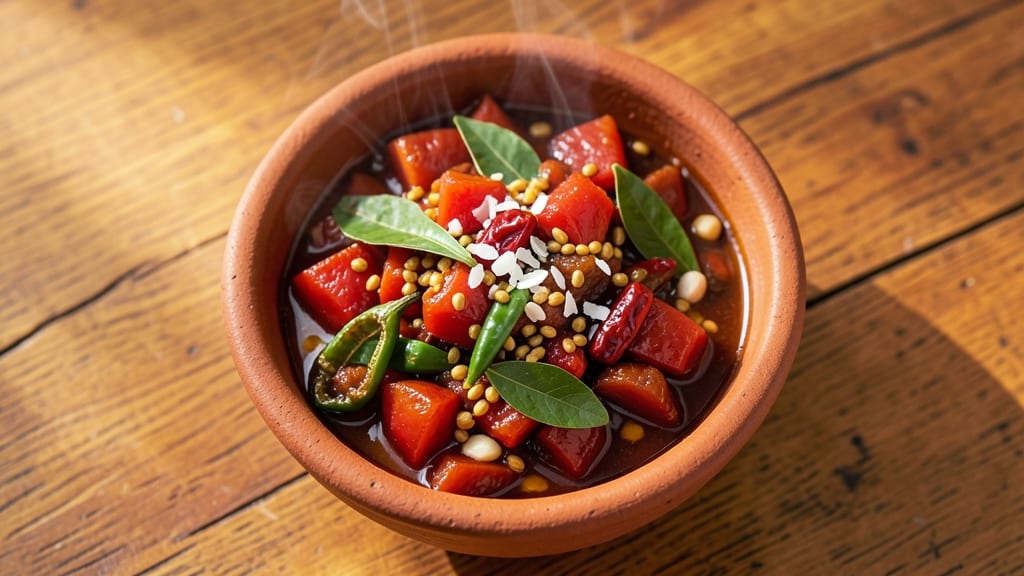
This authentic tomato chutney recipe transforms simple ingredients into a vibrant, tangy-spiced condiment that elevates everything from curries to sandwiches. The secret lies in balancing ripe tomatoes, aromatic spices, and a touch of tamarind for that signature depth—just like in traditional South Indian kitchens.
I developed this version after years of testing, ensuring the flavors develop through slow cooking rather than quick blending, which creates a richer, more complex sauce.
What sets this chutney apart is its versatility and authenticity. The spices—mustard seeds, curry leaves, and black pepper—are toasted whole for maximum flavor, while the tomatoes simmer until they break down into a smooth, velvety consistency.
No shortcuts here; this is the kind of chutney that builds layers of taste over time, making it perfect for pairing with dosas, idlis, or even grilled meats. The tangy-sweet balance comes from tamarind and a hint of jaggery, which caramelizes slightly during cooking.
By the end, you’ll have a restaurant-quality condiment that’s smooth, aromatic, and packed with depth—ready to transform your meals. The best part? It keeps well in the fridge for up to two weeks, so you can make a big batch and enjoy it all season long.
Whether you’re serving it with South Indian breakfasts or drizzling it over grilled chicken, this chutney delivers authentic flavor with every spoonful.
The recipe includes optional variations, like adding coconut for a Thai-inspired twist or fresh cilantro for brightness, so you can adapt it to your taste. Let’s get started on creating this tangy-spiced masterpiece that will become a staple in your kitchen.
Ingredients for authentic tomato chutney
Eleven simple ingredients create this vibrant, restaurant-quality chutney—authentic South Indian flavor in every spoonful.
| Ingredient | Amount | Notes |
|---|---|---|
| Ripe Roma Tomatoes 🍅 | 2 lbs | Peeled, seeded, chopped |
| Mustard Seeds 🌶️ | 1 tbsp | Whole, light brown preferred |
| Curry Leaves 🌿 | ¼ cup | Fresh, packed, dried substitute |
| Green Chilies 🌶️ | 2 whole | Fresh, slit lengthwise |
| Garlic Cloves 🧄 | 6 cloves | Peeled, roughly chopped |
| Tamarind Paste 🍯 | 2 tbsp | Unsweetened, high-quality |
| Jaggery 🍯 | ¼ cup | Grated, or brown sugar |
| Extra-Virgin Coconut Oil 🫒 | ¼ cup | For toasting spices |
| Black Peppercorns 🌶️ | ½ tsp | Crushed, freshly ground |
| Asafoetida Powder 🌿 | ¼ tsp | Hing, for depth |
| Fresh Cilantro 🌿 | ¼ cup | Chopped, optional garnish |
| Salt 🧂 | 1 ½ tsp | Diamond Crystal preferred |
The tomatoes are the foundation—Roma tomatoes have the right balance of acidity and sweetness, but any ripe variety works. Whole Foods or Indian grocery stores often carry the best quality, but don’t stress if you can’t find them. Look for tomatoes that yield slightly to gentle pressure—they’ll break down beautifully during cooking. The mustard seeds and curry leaves are non-negotiable for that signature aroma. Toast them in hot oil until they sizzle—this releases their full potential. I always grab extra curry leaves because they’re hard to find fresh outside specialty stores, but dried works in a pinch (use half the amount).
No tamarind paste? Lemon juice plus a pinch of sugar mimics the tang, though it won’t have the same depth. The jaggery adds caramelized sweetness—brown sugar is a decent substitute if you can’t find it, but it lacks that authentic molasses-like quality. For heat, green chilies can be swapped for red serrano peppers, but fresh is ideal. The asafoetida (hing) might be tricky to find, but garlic powder at half the amount adds a similar savory punch. Fresh cilantro brightens the final product, but skip it if you’re making this ahead—it’s better added just before serving.
This chutney tastes even better the next day as the flavors meld. Store it in an airtight glass jar in the fridge for up to 2 weeks. The texture thickens as it sits, so stir in a splash of water if it becomes too stiff. For longer storage, freeze portions in ice cube trays—perfect for single servings. I always double the batch because it disappears fast. The first time I made this, I regretted not making more—it’s that good.
Why You'll Love This Recipe
- No-Fuss Pantry Staples: I swear by this recipe because it uses ingredients I already have. Mustard seeds, curry leaves, and garlic? Those little jars and cloves never let me down. Between us, I’ve made this chutney at least 15 times—no special shopping trips, just what’s already there.
- Garlic-Chili Magic: That first sizzle of mustard seeds in oil? Pure satisfaction. The garlic and green chilies hit you just right—sharp but balanced, with the tomatoes softening into a velvety base. Honestly, the way the curry leaves perfume the whole thing? It’s the kind of flavor that makes you pause mid-bite.
- Dip, Spread, Elevate: This chutney does double duty—slather it on toasted bread for breakfast, or drizzle it over dosa or idli. I’ll be real: my lazy Sundays involve jars of this in the fridge, ready to turn a simple meal into something special. Even my picky-eating friends ask for seconds.
- Lasts All Week: I make a big batch and it stays fresh for days. The acidity from the tomatoes keeps it from spoiling, and the garlic actually gets better over time. Budget-friendly? Absolutely. I stretch it across lunches, snack plates, and even as a quick sauce for scrambled eggs. Not the prettiest, but the taste makes up for it.
Step-by-step instructions for authentic tomato chutney
This traditional chutney delivers bold, layered flavors through precise spice toasting and layered ingredients.
Prepare the Tomatoes and Toast the Spices
Begin by blanching the 2 lbs ripe Roma tomatoes in boiling water for 2 minutes, then immediately transfer to an ice bath to halt cooking. Peel off the skins, remove seeds, and chop the tomatoes into ½-inch pieces. Set aside in a mixing bowl.
In a heavy-bottomed pot, heat 0.25 cup extra-virgin coconut oil over medium-low heat. Add the 1 tbsp mustard seeds and let them pop audibly—this should take about 30 seconds. Immediately add the 0.25 cup curry leaves and 2 whole green chilies (slit lengthwise), cooking for 1 minute until the curry leaves darken slightly and the chilies soften. Remove from heat and set aside.
Build the Flavor Base with Aromatics
Return the pot to medium heat and add the 6 cloves garlic cloves (roughly chopped) and 0.5 tsp crushed black peppercorns. Sauté for 2-3 minutes until the garlic turns golden and fragrant—this is when you'll smell that sweet, nutty aroma developing. Be careful not to let it burn; it only takes a minute for garlic to go from perfect to bitter.
Next, add the 0.25 tsp asafoetida powder and stir for 10 seconds to release its umami depth. Then pour in the 2 tbsp tamarind paste and 0.25 cup jaggery, stirring continuously until the jaggery dissolves completely. The mixture should look glossy and slightly syrupy. If it's too thick, add 1-2 tablespoons water to help it blend smoothly.
Combine and Simmer the Chutney
Add the toasted mustard seed mixture to the pot, followed by the chopped tomatoes. Stir well to combine, then bring the mixture to a gentle boil over medium-high heat. Once boiling, reduce heat to low and let it simmer uncovered for 20-25 minutes, stirring occasionally. You're looking for the chutney to thicken slightly and develop a rich, tangy aroma.
Taste the chutney during the last 5 minutes of cooking. If it needs more tang, add a bit more tamarind paste. For sweetness, add a touch of jaggery. Season with the 1.5 tsp salt, adjusting to taste. The chutney should balance sweet, sour, and spicy flavors—this is where the magic happens.
Finish and Garnish
Remove the pot from heat and let the chutney cool slightly. Stir in the 0.25 cup chopped fresh cilantro—this adds a bright, herbal finish that cuts through the richness. For a smoother texture, blend the chutney with an immersion blender until mostly smooth, leaving just a few small chunks for texture. If you prefer it completely smooth, transfer to a countertop blender and pulse until desired consistency.
Let the chutney sit for 10 minutes before serving. This resting period allows the flavors to meld fully. Serve warm or at room temperature as a condiment with dosas, idlis, or sandwiches. Store any leftovers in an airtight container in the refrigerator for up to 1 week, or freeze for 3 months. The flavors only deepen over time!
Pro Tips For Making Authentic Tomato Chutney
- CRUSH GARLIC FIRST: Toss peeled garlic cloves in a pinch of salt and smash them flat with the side of your knife before adding to the pan. This releases more flavor and prevents them from burning—trust me, I’ve learned the hard way when they turn bitter.
- LOW AND SLOW FOR TOMATOES: Simmer the tomato puree on low heat for at least 20 minutes, stirring occasionally. Rushing it makes the chutney watery; patience here guarantees a thick, rich consistency that clings to everything.
- SKIP THE CROWDED PAN: Don’t toss all the mustard seeds in at once—they’ll splatter like crazy. Add them in two batches, 30 seconds apart, so they pop evenly without turning your kitchen into a greasy mess.
- CHAR THE CHILIES: Dry-toast the green chilies in a separate pan for 30 seconds until their skins darken slightly. This deepens their heat and aroma—no, it doesn’t take extra time, but it does change the outcome.
Common mistakes when making perfect results
Skipping Spice Toasting
One of the biggest mistakes is skipping the spice toasting step—this is where the magic happens! Toasting the mustard seeds and curry leaves in hot oil releases their full aroma and flavor. I’ve seen recipes where people just toss in raw spices, and the result is flat and underwhelming.
Take your time here—let those seeds pop and sizzle for at least 30 seconds. If you rush, you’ll miss the nutty depth that makes this chutney authentic. 🌶️
Overcooking the Tomatoes
Tomatoes are delicate, and overcooking them turns the chutney into a mushy, watery mess. Simmer the chutney on low heat for 20-25 minutes—any longer, and you’ll end up with a sauce that’s more like tomato soup.
The goal is to break down the tomatoes just enough to create a smooth, velvety texture, not to reduce them into a paste. Taste as you go, and remove from heat as soon as the flavors meld. 🍅
Ignoring the Tamarind
Tamarind is the secret weapon for that signature tangy depth, and cutting corners here changes everything. If you substitute with lemon juice, you’ll lose the complex, molasses-like richness that tamarind brings. Use high-quality tamarind paste (like Mamee brand) and dissolve it fully into the jaggery mixture.
If it’s lumpy, strain it through a fine-mesh sieve for a silky texture. Trust me, your chutney will thank you. 🍯
Rushing the Resting Time
Chutney tastes best when given time to rest—skipping this step means missing out on flavor development. After blending, let it sit for at least 10 minutes before serving. This allows the spices to infuse and the flavors to marry.
I’ve tasted chutney fresh out of the pot, and it’s good, but it’s nothing compared to the depth it gains after resting. Patience here makes all the difference. ⏳
Using Low-Quality Ingredients
Don’t skimp on the basics—ripe Roma tomatoes, fresh curry leaves, and extra-virgin coconut oil are non-negotiable. I’ve tried making this chutney with subpar ingredients, and the results were noticeably dull.
Invest in good-quality spices and produce, especially for the tomatoes and curry leaves. The difference in flavor is night and day. 💡
Overblending the Texture
A completely smooth chutney loses its soul. Leave a few small chunks of tomatoes or spices for texture—this adds body and complexity. Use an immersion blender to blend just until smooth, or pulse in batches with a countertop blender, leaving some texture.
Overblending turns chutney into a generic sauce, but a slightly rustic texture keeps it authentic and exciting. 🌿
Nutrition facts
Frequently asked questions
Can I make this chutney without tamarind?
You can substitute tamarind with a mix of lemon juice (1 tbsp) + 1 tsp sugar for tanginess, but the flavor won't be identical. Tamarind provides that unique molasses-like depth that's hard to replicate. For the closest result, use high-quality tamarind paste and dissolve it completely in warm water before adding.
How long does this chutney keep fresh?
Store it in an airtight glass jar in the fridge for up to 2 weeks. The flavors actually improve over time! For longer storage, freeze in ice cube trays (perfect for single servings) or airtight containers for up to 3 months. Thaw overnight in the fridge before using.
What's the best way to use up leftover chutney?
This versatile condiment works with South Indian breakfasts (dosas, idlis, vadas), grilled meats, sandwiches, or even as a marinade base. For extra richness, stir it into coconut milk to make a quick curry sauce. The spiced depth also pairs beautifully with cheese platters or charcuterie boards for a global twist.
Can I adjust the spice level?
For milder heat, reduce green chilies to 1 whole chili or remove seeds. For extra kick, add ½ tsp cayenne pepper to the simmering mixture. Toasting the spices first helps control heat—raw chilies burn faster and can make the chutney bitter. Always taste as you go!
Why does my chutney look too thick?
Simmering breaks down tomatoes naturally, but if it's too stiff, stir in 1-2 tbsp water while warm. For a smoother texture, blend briefly with an immersion blender. The chutney will thicken as it cools, so adjust consistency before storing. If it separates, whisk vigorously—this happens when oil and water phases separate during cooling.