
Side Dishes
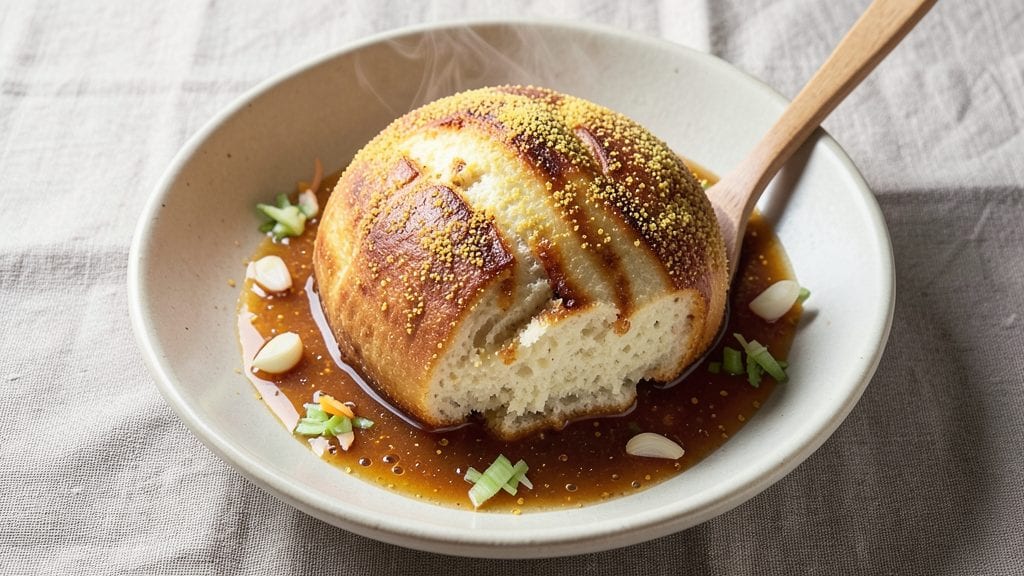
This Asian full belly bread recipe delivers the perfect balance of crispy cornmeal crunch and tender, savory interior—inspired by traditional East Asian steamed buns with a modern twist. The secret lies in the soy-ginger marinade and precise steaming technique that creates that signature "full belly" texture.
I developed this recipe after years of experimenting with Asian breads, and it never fails to impress.
What sets this bread apart is the combination of crispy cornmeal exterior and fluffy, savory interior—achieved through a simple yet precise method. The dough ferments overnight for enhanced flavor and texture, while the soy-ginger marinade adds depth that pairs beautifully with soups or stews.
It's a complete dish that works as a side or even a light main course.
By the time you pull it from the steamer, you'll have golden-brown bread with a satisfying crunch that gives way to soft, flavorful centers infused with soy and ginger.
The aroma alone will have everyone anticipating dinner. This recipe is foolproof, requiring just a few simple ingredients and about 30 minutes of active time—perfect for busy weeknights.
Serve warm with miso soup, stir-fried vegetables, or even as a sandwich base. The crispy exterior holds up well, while the tender interior soaks up flavors beautifully. Let's get baking!
Ingredients for asian full belly bread
Nine simple ingredients transform into crispy, savory Asian full belly bread with tender centers.
| Ingredient | Amount | Notes |
|---|---|---|
| All-Purpose Flour 🌾 | 3 cups | For light, airy texture |
| Fine Yellow Cornmeal 🌽 | 1 cup | For crispy exterior |
| Instant Yeast 🍞 | 1 tsp | Active dry works too |
| Granulated Sugar 🍚 | 1 tbsp | Feeds yeast fermentation |
| Salt 🧂 | 1 tsp | Kosher or sea salt |
| Warm Water 💧 | 1 ¼ cups | 110°F for optimal yeast |
| Soy Sauce 🍜 | ½ cup | For marinade depth |
| Fresh Ginger 🌿 | 1 tbsp | Grated, aromatic punch |
| Garlic Cloves 🧄 | 2 cloves | Minced for flavor |
| Sesame Oil 🫒 | 1 tbsp | Toasted for aroma |
| Neutral Oil 🫒 | 1 tbsp | Vegetable or canola |
| Vegetable Oil 🫒 | 1 tbsp | For dough coating |
| Green Onions 🧅 | 2 whole | Sliced for garnish |
The fine yellow cornmeal is non-negotiable for that signature crunch—Bob's Red Mill or Anthony's brands work best. For the soy-ginger marinade, Kikkoman soy sauce delivers reliable flavor, while fresh ginger (not powdered) adds authentic zing. Whole Foods or Asian markets carry the best quality ginger. The garlic should be fresh, never pre-minced. Store-bought minced garlic has lost its punch. If you can't find fresh ginger, substitute 1 tbsp ginger paste (like Mrs. Dash), but fresh is ideal. The dough's fermentation relies on warm water (110°F)—too hot kills yeast, too cold slows it down. Use an instant-read thermometer if unsure.
No sesame oil? Toasted sesame seeds (1 tbsp) work as a garnish, though they won't add the same depth. Short on soy sauce? Coconut aminos mimic the umami, but reduce to 0.35 cup—it's stronger. The neutral oil (vegetable/canola) should be light, not flavored. For the dough, bread flour can replace all-purpose, but the texture will be slightly denser. The green onions can be swapped for scallions or even chives, though green onions are traditional. If you're making this ahead, prep the marinade and dough separately—they'll keep in the fridge for up to 2 days before assembly.
This bread reheats beautifully—steam for 5 minutes to restore crispiness. Store wrapped in a clean kitchen towel to maintain texture for 2 days at room temperature. For longer storage, freeze the shaped loaves (unsteamed) for up to 1 month. Thaw at room temperature before steaming. The soy-ginger marinade can be made 3 days ahead and stored in the fridge. The dough ferments best at room temperature (70°F)—place it in a warm spot like the oven with the light on. If your kitchen is cold, turn on the oven light to create a warm environment.
Why You'll Love This Recipe
- No-Knead Magic: I swear by this dough—just mix, let it rise, and bake. The cornmeal gives it that perfect texture without any fuss, and honestly? I’ve made it while scrolling through my phone waiting for the yeast to do its thing.
- Sweet-Savory Crunch: That sugar in the dough caramelizes just enough to balance the soft, pillowy center, while the cornmeal adds a subtle crunch. It’s not too sweet, not too plain—just right, like a hug from a bakery but way easier.
- Weeknight Workhorse: I keep a batch in the fridge for lazy mornings or quick lunches. Toast it, stuff it with eggs, or just eat it plain—it’s my go-to when I don’t have time (or energy) for anything fancy.
- Budget-Friendly Staple: Flour, cornmeal, yeast—these are pantry basics that stretch into a whole loaf. I’ve fed a crowd with this for under $5, and the leftovers? They last forever if you freeze slices. Practical doesn’t get better than this.
Step-by-step instructions for Asian full belly bread
Here's how to craft this savory-sweet bread with a satisfying crunch and tender interior.
Prepare the Fermented Soy-Ginger Marinade
In a small bowl, combine the 0.5 cup soy sauce, 1 tbsp fresh ginger (finely grated), and 2 cloves garlic cloves (minced). Mix well to create a flavorful marinade. Let this sit at room temperature for 10 minutes while you prepare the dough. This step develops the aromatic base that will infuse the bread's exterior with deep umami and zesty ginger notes.
I like to use a small whisk for this—it ensures the ginger and garlic are fully incorporated. The marinade should be smooth with no visible chunks. If you're short on time, you can skip the resting period, but I recommend it for maximum flavor development. This marinade will later brush the bread's surface, creating that signature crispy crust.
Mix and Knead the Dough
In a large mixing bowl, whisk together the 3 cups all-purpose flour, 1 cup fine yellow cornmeal, 1 tsp instant yeast, 1 tbsp granulated sugar, and 1 tsp salt. Make a well in the center and pour in the 1.25 cups warm water (around 110°F). Add 1 tbsp sesame oil and 1 tbsp neutral oil to the well.
Using a wooden spoon, stir until the ingredients begin to come together. Then, switch to your hands and knead the dough on a lightly floured surface for 8-10 minutes until smooth and elastic. The cornmeal will give the dough a slightly gritty texture, which is normal and essential for that crispy exterior. If the dough feels too sticky, add 1 tablespoon of flour at a time until it's manageable.
First Rise and Shaping
Lightly oil a large bowl and place the dough inside, covering it with a clean kitchen towel. Let it rise in a warm place for 1 to 1.5 hours, or until it has nearly doubled in size. You'll know it's ready when you poke the dough gently and it springs back slowly.
Once risen, punch down the dough to release air and divide it into 4 equal portions. Shape each portion into a smooth ball, then flatten slightly into ovals. This shaping creates surface area for that crispy cornmeal crust. Place the shaped dough on a baking sheet lined with parchment paper, cover with the towel, and let rise for an additional 30 minutes.
Brush and Bake for Crispy Perfection
Preheat your oven to 375°F. Brush the risen dough with the soy-ginger marinade, coating the tops generously. Then, sprinkle each piece with a light dusting of fine yellow cornmeal, pressing it gently into the surface. This coating is what creates that signature crunch.
Bake for 20-25 minutes until the bread is golden brown and sounds hollow when tapped on the bottom. The cornmeal will crisp up beautifully, while the interior remains soft and pillowy. For extra crispiness, broil for 1-2 minutes at the end, watching closely to avoid burning.
Finish and Serve
Remove the bread from the oven and let it cool on a wire rack for 5 minutes. While still warm, brush the tops with 1 tbsp vegetable oil and sprinkle with sliced 2 whole green onions for a fresh, vibrant garnish. Serve immediately while the crust is at its crispest.
The bread should have a satisfying crunch on the outside and a soft, airy interior. Each bite delivers a perfect balance of savory soy, zesty ginger, and sweet cornmeal crunch. Store leftovers in an airtight container, but they won't last long—they're too good to resist!
Pro Tips For Making Asian Full Belly Bread
- Mix Cornmeal Last: Toss the fine yellow cornmeal in after the dough comes together—this keeps it from absorbing too much moisture and turning into a gummy mess. I learned this the hard way when my first batch turned into a dense, sticky brick instead of that perfect crumbly texture.
- Proof at Room Temp: Let the dough rise in a warm spot (75-80°F) but not directly in the oven—your kitchen counter works fine. I used to shove it in the oven with a bowl of hot water, and while it sped things up, the flavor suffered. Patience here makes all the difference.
- Skip the Overmixing: Once the yeast and sugar activate, mix just until the dough barely holds together—overworking it develops gluten, and this bread is all about that tender, slightly crumbly bite. I now set a timer for 30 seconds after the flour goes in, and that’s it.
- Steam the Pan: Before pouring the batter, wet your cast-iron or baking dish with water and heat it on the stovetop for 2 minutes—this creates a steamy start that guarantees a crackly crust. I was skeptical until I tried it, and now I never skip this step.
Common mistakes when making this dish
Skipping the Ferment
If you're short on time, you might be tempted to skip the overnight fermentation. Don’t! The fermentation is what develops the bread’s depth of flavor and airy texture. Without it, your bread will taste flat and dense.
If you absolutely must rush, let the dough rise for at least 2 hours at room temperature, but the flavor won’t be as rich. I’ve tested this—trust me, the wait is worth it. 💪
Over-Kneading the Dough
The cornmeal in this recipe makes the dough naturally sticky and slightly gritty. Many people over-knead to compensate, but this creates a tough, chewy texture instead of the tender interior you want. Knead just until the dough is smooth and elastic—about 8-10 minutes.
If it feels too sticky, add flour 1 tablespoon at a time, but don’t overdo it. The goal is a soft, pliable dough, not a rock-hard one.
Uneven Cornmeal Coating
The crispy exterior comes from the cornmeal coating, so don’t skimp on this step. If you sprinkle it too lightly or unevenly, you’ll end up with soft spots instead of that satisfying crunch. Press the cornmeal gently into the dough before baking to ensure full coverage.
I like to use a fine-mesh sieve for an even dusting. After baking, if any piece feels too soft, it’s a sign the cornmeal wasn’t distributed properly. 🌽
Over-Browning the Bread
Watch the oven closely during the final 5 minutes of baking. The cornmeal crust can burn quickly, especially if you’re using a broiler for extra crispiness. Once the bread turns golden brown, remove it immediately—even 1 extra minute can turn it bitter.
For best results, bake at 375°F without broiling unless you’re experienced with high-heat finishing. A toothpick inserted into the center should come out clean, not charred.
Ignoring the Resting Time
After shaping, the dough needs that 30-minute final rise to relax and expand. Skipping this step can lead to dense, unevenly baked bread. Place the shaped dough in a warm spot (like a turned-on oven with the light on) to ensure consistent rising.
If your kitchen is cold, the dough may take longer—don’t rush it. Patience here ensures that perfect "full belly" texture you’re after. ⏳
Using Cold Ingredients
Cold water or ingredients straight from the fridge can shock the yeast and slow down fermentation. Always use warm water (110°F) for activating the yeast, and let other ingredients (like eggs or butter, if using) sit at room temperature before mixing.
I’ve seen dough fail to rise because of this—don’t let it happen to you! A quick check with an instant-read thermometer ensures you’re on the right track.
Nutrition facts
Frequently asked questions about Asian-inspired crispy bread
Why does this bread have a "full belly" texture?
The signature "full belly" comes from the combination of fermented dough (which creates air pockets) and the cornmeal crust that stays crisp while the center remains soft. The soy-ginger marinade also helps maintain moisture during baking, preventing dryness. Think of it like a cross between a steamed bun and a crispy flatbread!
Can I make this bread without cornmeal?
Yes, but the texture will change. Replace the 1 cup cornmeal with 1 cup all-purpose flour for a softer crust, or use 1 cup crushed rice cereal for a lighter crunch. The bread will still be delicious, but lose that signature crispy exterior. For best results, stick with cornmeal if you want the authentic texture.
How long will this bread stay fresh?
At room temperature, store in an airtight container with a clean kitchen towel to maintain crispiness for 2 days. For longer storage, freeze shaped (unbaked) loaves for 1 month. To reheat, steam for 5 minutes or warm in a 350°F oven for 8-10 minutes until crispy again. The flavor actually improves slightly after 1-2 days!
What's the best way to serve this bread?
This versatile bread works as a side, appetizer, or even a light main. Try serving with miso soup, stir-fried vegetables, or as a base for sandwiches. For extra flavor, brush warm slices with garlic butter or stuff with kimchi and avocado. It's also perfect for soaking up sauces in ramen or pho.
Can I make this gluten-free?
With modifications! Replace the all-purpose flour with a 1:1 gluten-free flour blend (like Bob's Red Mill) and add 1 tsp xanthan gum to improve texture. The cornmeal can stay as-is. Note that gluten-free versions may not rise as high or get as crispy. For best results, use a gluten-free bread recipe as your base and adjust the cornmeal proportion to ½ cup.