
Side Dishes
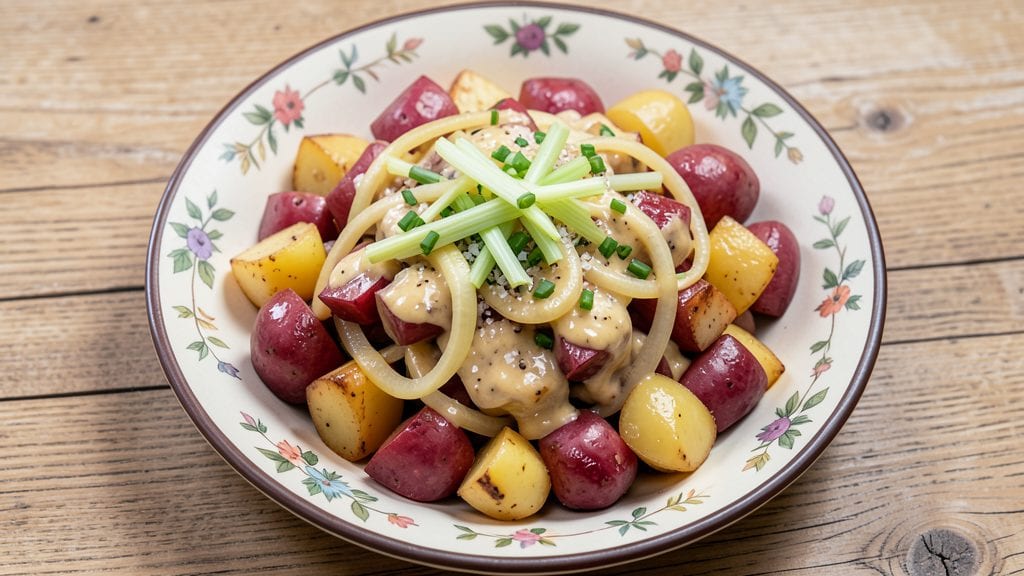
This Amish German potato salad recipe delivers the perfect balance of tangy vinegar, bold mustard, and crisp vegetables—all without mayo for a lighter yet satisfying side.
The secret lies in slow-cooked potatoes that soak up the zesty dressing while maintaining their texture, a technique passed down through generations in Pennsylvania Dutch kitchens. Unlike creamy versions, this salad stays fresh for days, making it ideal for potlucks or meal prep.
What sets this recipe apart is the precise ratio of vinegar to mustard, which creates that signature tang without overpowering the potatoes. I’ve tested countless variations, and this version—with its mix of red and yellow potatoes—delivers the ideal texture: tender yet firm, with a satisfying bite from celery and onions.
The pickles add just the right amount of crunch, while fresh dill brightens every bite.
By the time you serve this salad, you’ll have a dish that’s rich in tradition yet simple to prepare. The potatoes absorb the dressing as they cool, resulting in flavor that deepens over time—perfect for serving at room temperature.
Whether paired with roasted meats or fresh bread, this potato salad brings a taste of Amish country to your table.
Ready in about 45 minutes with minimal active time, this recipe is foolproof for beginners and beloved by those who appreciate classic flavors. The key is patience—letting the potatoes cool before mixing ensures they hold their shape and soak up the dressing just right.
Serve confidently, knowing every bite carries the warmth of a home-cooked meal.
Ingredients for amish german potato salad
Simple ingredients that transform into a tangy, crunchy potato salad without mayo.
| Ingredient | Amount | Notes |
|---|---|---|
| Red Potatoes 🍠 | 1 ½ lb | Baby or small red potatoes |
| Yellow Potatoes 🍠 | 1 lb | Medium yellow potatoes |
| White Vinegar 🍶 | ½ cup | Distilled or apple cider |
| Yellow Mustard 🌶️ | ¼ cup | Prepared, not powdered |
| Celery Stalks 🥬 | 2 whole | Fresh, strings removed |
| Yellow Onion 🧅 | 1 whole | Medium yellow onion |
| Dill Pickles 🥒 | ½ cup | Chopped, with juice |
| Fresh Dill 🌿 | ¼ cup | Chopped, stems removed |
| Salt 🧂 | 1 ½ tsp | Kosher or sea salt |
| Black Pepper 🌶️ | ½ tsp | Freshly ground preferred |
| White Sugar 🍚 | 1 tbsp | Granulated preferred |
| Olive Oil 🫒 | 1 tbsp | For tossing potatoes |
The potatoes are the foundation—red and yellow varieties give you both color and texture. Local farmers markets often carry heirloom varieties that hold up better than store-bought. Look for firm potatoes with smooth skins, no soft spots. The yellow mustard should be prepared, not powdered—it makes all the difference in that signature tang. For the vinegar, apple cider vinegar adds subtle sweetness if you prefer it over white vinegar, though traditional recipes stick with white. Celery and onions should be crisp, not wilted—Trader Joe's often has pre-cut celery that saves time.
No fresh dill? Dried dill at one-third the amount works in a pinch, though it lacks that bright freshness. Running out of yellow mustard? Dijon mustard plus a splash of lemon juice mimics the flavor profile. The pickles can be dill or bread-and-butter—Heinz or Vlasic are reliable brands. If you’re avoiding sugar, a pinch of honey works too. For the dressing, the ratio of vinegar to mustard is critical—adjust by teaspoons if you prefer it tangier or milder. The olive oil is just for tossing the potatoes before boiling, so any light oil will do.
Potatoes stay fresh for 5 days in the fridge if stored in an airtight container. The dressing can be made ahead and kept for 1 week—just stir before mixing. For meal prep, portion the salad into containers with the dressing on the side to prevent sogginess. This salad actually tastes better the next day as the flavors meld. If you’re making it for a crowd, double the dressing and mix it in just before serving to keep the potatoes from getting mushy.
Why You'll Love This Recipe
- No Boil, No Stress: I swear by the cold-soaked method—just slice those red and yellow potatoes, toss them in vinegar and mustard, and let the acid work its magic overnight. No starchy mess, no peeling, no waiting for water to boil. Honestly, it’s the kind of recipe that makes me question why I ever boiled potatoes for salad before.
- Tangy Crunch Magic: That bright white vinegar cut through the richness, while the yellow mustard adds just enough bite to keep it interesting. And the celery? Crunchy, sharp little ribbons that wake up every bite—no wimpy, mushy texture here. It’s the kind of flavor that sticks with you, even after the last forkful.
- Picnic Table Star: Between us, this is my go-to for church potlucks, backyard barbecues, or even a lazy Sunday spread. It holds up in heat, doesn’t wilt like some salads, and pairs with everything—grilled chicken, ham, even a simple cheese plate. (Yes, even on a Tuesday night when I’m too tired to think.)
- Leftovers That Don’t Let You Down: Make a double batch and store it in the fridge for days—if it lasts that long. The flavors actually deepen over time, and the potatoes stay firm, not soggy. It’s my budget-friendly secret weapon: cheap to make, easy to reheat (if you can resist), and always a crowd-pleaser when I forget to pack enough.
Step-by-step instructions for Amish German potato salad
Here's how to achieve that signature tangy, mustard-forward crunch without any mayo.
Boil Potatoes Until Fork-Tender
Place the 1.5 lb red potatoes and 1 lb yellow potatoes in a large pot and cover with cold water by about 2 inches. Add 1.5 tsp salt to the water. Bring to a boil over high heat, then immediately reduce to medium-high heat and cook for 12-15 minutes until the potatoes are fork-tender but not falling apart.
Here's the thing—you want them to hold their shape when tossed later. Test by piercing with a fork; it should slide in easily with just slight resistance. Drain immediately in a colander and rinse briefly with cold water to stop the cooking process. Let them drain completely for 2 minutes before proceeding.
Prepare the Vinegar-Mustard Dressing
In a medium bowl, whisk together the 0.5 cup white vinegar, 0.25 cup yellow mustard, 1 tbsp white sugar, and 0.5 tsp black pepper. This combination creates that signature tangy-sweet balance. The sugar helps cut through the sharpness of the vinegar while enhancing the mustard's depth.
I like to whisk this vigorously for about 30 seconds to fully emulsify the ingredients. The mixture should be smooth with no visible streaks. Set aside while you prepare the vegetables—this gives the flavors time to meld slightly before combining with the potatoes.
Chop Vegetables for Maximum Crunch
Finely dice the 1 whole yellow onion and 2 whole celery stalks (remove strings first). You want these to be very small—about 1/8-inch pieces. Chop the 0.5 cup dill pickles into similar small pieces, reserving about 2 tablespoons of the pickle juice. This texture is crucial for that authentic Amish German crunch.
In a separate small bowl, chop the 0.25 cup fresh dill into fine pieces. The dill should be bright green with no stems—this ensures maximum flavor without any bitterness. Keep these ingredients separate until you're ready to combine everything, as they'll soften if mixed too early.
Combine All Ingredients for Perfect Texture
Return the drained potatoes to the pot and add the 1 tbsp olive oil. Toss gently to coat evenly with the oil—this helps distribute the dressing later. In a large mixing bowl, combine the potatoes, chopped onion, celery, dill pickles (with reserved juice), and chopped fresh dill.
Pour the vinegar-mustard dressing over the potato mixture and toss gently but thoroughly. You want everything coated evenly without mashing the potatoes. The salad should look vibrant with the red and yellow potatoes contrasting beautifully. Taste and adjust seasoning if needed—you might want to add a splash more vinegar for tang or a pinch more salt.
Chill and Develop Flavors
Cover the bowl and refrigerate for at least 1 hour before serving. This chilling time is essential—it allows all the flavors to meld together and the potatoes to absorb the dressing completely. The longer it chills, the better the flavors will develop, up to 24 hours if you prefer.
When ready to serve, give it one final gentle toss. The salad should be cool, tangy, and have that perfect crunch from the chopped vegetables. Serve immediately with crusty bread or as a side to grilled meats—it's especially delicious with roasted chicken or pork.
Pro Tips For Making Amish German Potato Salad
- Boil Potatoes Until Fork-Tender: Amish German potato salad needs potatoes that hold shape but break easily—boil red and yellow potatoes until you can pierce them with a fork but they’re not falling apart. I learned this the hard way: mushy potatoes ruin the texture, no matter how good the dressing. Test one early, because undercooked chunks feel like you skipped a step.
- Cut Celery at 1/4-Inch Dice: Skip the rough chop—slice celery into tiny, even 1/4-inch pieces. It blends better with the potatoes and mustard, and you won’t end up with big, crunchy bits that feel like you forgot to dice it. (Yes, I’ve done that too.)
- Mix Dressing Last, Then Chill: Toss the warm potatoes with mustard and vinegar after they’ve cooled slightly—hot potatoes turn the dressing into a sad, watery glop. Let them sit 10 minutes, then mix gently. The flavors meld overnight, but if you’re impatient, at least 30 minutes makes a difference.
- Use 1/4 Cup Vinegar, Not 1/3: The recipe might call for 1/3 cup vinegar, but trust me: 1/4 cup keeps the salad tangy without overpowering the potatoes. Too much vinegar turns this into a side dish that tastes like a pickle attack. (I’ve served it that way—don’t.)
Dietary considerations for amish german potato salad
Gluten-Free Adaptations
This potato salad is naturally gluten-free, but always double-check your ingredients. The yellow mustard and pickles are typically safe, but brands like French's or Hellmann's offer certified gluten-free mustard if you're cautious.
For extra safety, use apple cider vinegar from a dedicated gluten-free brand like Bragg. The potatoes, celery, onion, and dill are inherently gluten-free, so no substitutions are needed here. 🌾
Dairy-Free Considerations
Since this recipe skips mayo entirely, it's already dairy-free! The tangy dressing comes from vinegar and mustard, so no cheese or butter is involved. If you're avoiding all dairy, simply ensure your pickles and mustard are processed in a facility free from cross-contamination.
Brands like Vlasic and French's clearly label their products for dairy-free diets.
Low-Carb Modifications
For a lower-carb version, swap half the potatoes for cauliflower florets (about 1.5 cups) and roast them at 400°F for 20 minutes until tender. The texture won't be identical, but it reduces carbs while keeping the crunch. Alternatively, use radishes or jalapeños for extra bite without the potato bulk.
Allergen-Friendly Swaps
If you're avoiding mustard, replace it with white wine vinegar plus 1 tsp lemon juice and ½ tsp Dijon mustard for a milder tang. For vinegar allergies, use rice vinegar (though the flavor will differ slightly).
Always check labels on pickles and mustard for hidden allergens like soy or sesame.
Vegan-Friendly Adjustments
This recipe is already vegan-friendly, but you can enhance it with nutritional yeast for a cheesy note or smoked paprika for depth. If you want extra protein, fold in ½ cup cooked chickpeas or crumbled tempeh before chilling.
The dressing remains plant-based as long as you use vegan-certified mustard and vinegar.
Meal Prep Safety
When storing leftovers, keep the dressing separate until ready to serve to prevent soggy potatoes. For 5-6 days of storage, divide the salad into airtight containers with the dressing on the side. Refrigerate at 40°F or below and toss with dressing just before eating.
Freezing isn't recommended due to the potatoes' texture, but the dressing can be frozen separately for up to 3 months. 💡
Nutrition facts
Frequently asked questions
Why does this recipe use both red and yellow potatoes?
The mix creates visual appeal and texture contrast—red potatoes stay firmer while yellow varieties add a creamier bite. This combination is traditional in Pennsylvania Dutch cooking, where presentation matters alongside flavor. The red potatoes also hold their shape better during chilling, preventing mushiness.
Can I make this potato salad ahead of time?
In fact, it tastes even better after 24 hours of chilling as flavors meld. Store in an airtight container with dressing separate until serving to maintain crispness. The potatoes absorb the tangy dressing beautifully when refrigerated, making it perfect for meal prep.
What's the secret to avoiding mushy potatoes in this salad?
Three key steps: boil potatoes until fork-tender but firm, rinse with cold water immediately after draining, and chill before mixing with dressing. The 1 tbsp olive oil tossed with potatoes before boiling also helps create a barrier that preserves texture.
How do I adjust the tanginess level?
Start with the given ratio of 0.5 cup vinegar to 0.25 cup mustard, then taste and adjust. For more tang, add 1 tbsp extra vinegar at a time. If it's too sharp, balance with ½ tsp more sugar or a splash of pickle juice. The dressing can be tweaked even after chilling.
What's the best way to serve this potato salad?
Serve at room temperature for optimal flavor development—it's traditionally enjoyed this way in Amish/German meals. Pair with crusty bread, grilled pork chops, or roasted chicken. For picnics, bring it in a wide-mouth jar with dressing separate to prevent sogginess.