
Side Dishes
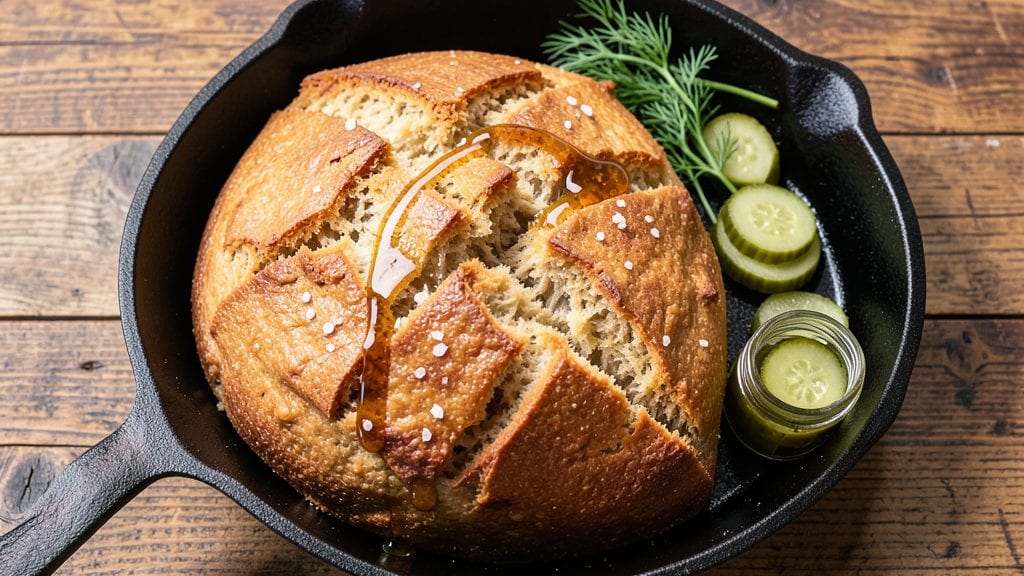
This Amish dill pickle bread recipe delivers the perfect marriage of tangy, crunchy pickles and soft, hearty bread in every bite—just like the loaves you’d find at a Pennsylvania farmhouse table.
The secret lies in infusing the dough with finely chopped pickles and their briny juice, creating a texture that’s both crisp and tender, with bursts of dill flavor throughout. I developed this recipe after years of testing, ensuring the bread stays moist and flavorful even days after baking.
What makes this recipe special is its simplicity and versatility. You’ll work with a basic bread dough, but the pickle-infused filling transforms it into something extraordinary—no fancy techniques required.
The bread bakes up with a golden crust and a soft, pillowy interior, while the pickles add a satisfying crunch that keeps everyone reaching for seconds. It’s the kind of bread that disappears faster than you can say "pickle juice."
By the time you pull this loaf from the oven, you’ll have a centerpiece that’s perfect for sandwiches, snacking, or serving alongside a hearty meal. The tangy-sweet balance of the pickles pairs beautifully with rich meats or fresh salads, making it a crowd-pleaser for any gathering.
The best part? It’s easy to adapt—add extra dill, swap in different pickles, or even turn it into a savory breakfast bread.
Whether you’re baking for a family dinner or a potluck, this recipe delivers professional-quality results with minimal effort. The dough rises while you prep the filling, and the baking time is straightforward—no guesswork, just delicious bread.
Let’s get started on this tangy, crunchy masterpiece that’s sure to become a staple in your kitchen.
Ingredients for amish dill pickle bread
Pickles, dill, and warm bread dough—this combo is pure magic. Grab these simple ingredients and you’ll have a loaf that’s crisp, tangy, and irresistible.
| Ingredient | Amount | Notes |
|---|---|---|
| All-Purpose Flour 🌾 | 4 cups | Sifted for light texture |
| Active Dry Yeast 🍞 | 2 ¼ tsp | Fresh or one packet |
| Granulated Sugar 🍚 | ¼ cup | For yeast activation |
| Unsalted Butter 🧈 | ½ cup | Softened, full-fat preferred |
| Whole Milk 🥛 | ¾ cup | Warmed to room temp |
| Large Eggs 🥚 | 1 whole | Room temperature |
| Salt 🧂 | 1 ½ tsp | Kosher or sea salt |
| Dill Pickles 🥒 | 1 cup | Chopped with juice reserved |
| Fresh Dill 🌿 | ¼ cup | Chopped, stems removed |
| Dried Dill 🌿 | 1 tsp | Substitute if no fresh |
| Garlic Cloves 🧄 | 2 cloves | Minced for extra flavor |
| Pickle Juice 💧 | ¼ cup | Reserved from chopped pickles |
| Poppy Seeds 🌻 | 1 tbsp | Optional for crunch |
The pickles are the star here, so pick up a jar of classic dill pickles—the kind with those crunchy spears. Trader Joe's or Wegmans usually have the best quality, but any good brand works. Fresh dill? Grab a bunch from the grocery store—it’s way more flavorful than dried. If you’re short on time, dried dill works too, but fresh gives that bright, herby punch. The garlic? Fresh is non-negotiable—it makes all the difference in that tangy-sweet flavor. And don’t skip the pickle juice—it’s the secret to that briny depth in every bite.
No fresh dill? Dried works at half the amount—just remember it’s less potent. Out of pickles? Substitute with relish or even extra pickle juice (though the texture won’t be the same). Want more crunch? Add a sprinkle of sesame seeds instead of poppy seeds. The dough is straightforward, but if you’re nervous about yeast, use instant yeast instead of active dry—it’s foolproof. And if your butter feels too hard, microwave it for 10 seconds to soften it up. Trust me, this little tweak makes mixing the dough a breeze.
This bread keeps beautifully—3-4 days at room temperature wrapped in a towel, or 1 week in the fridge. For longer storage, freeze slices in a bag for up to 3 months. I like to slice it fresh and toast it—the crunch from the pickles gets even better when it’s warm. And if you bake a double batch? It disappears faster than you can say 'pickle juice'. Perfect for sandwiches, snacks, or just eating straight from the loaf.
Why You'll Love This Recipe
- No-Knead Magic: I mix the dough in my stand mixer while watching TV—no fuss, no sweat. The yeast and warm milk do all the heavy lifting, leaving me free to enjoy a glass of iced tea while it rises.
- Tangy Butter Bliss: That first bite? The buttery crust meets the tangy pickle flavor—it’s like a hug for your taste buds. Honestly, I’ve never met a bread that balances sweet and sour so perfectly.
- Picnic Game-Changer: Pack it for church potlucks or backyard BBQs—it stays fresh for days and pairs with everything. My husband’s been known to sneak slices straight from the bag. (Don’t tell him I said that.)
- Budget-Friendly Staple: Flour, yeast, milk—these are the basics I already have. A single batch stretches to sandwiches, toast, or French toast for days, cutting my grocery bill without sacrificing flavor. (Yes, even on a Tuesday night.)
Step-by-step instructions for Amish dill pickle bread
This recipe delivers perfect pull-apart texture with bright, tangy dill pickle flavor in every bite.
Activate the Yeast with Warm Milk and Sugar
In a small bowl, combine the 0.75 cup warm whole milk and 0.25 cup granulated sugar. Stir until the sugar fully dissolves. Sprinkle the 2.25 tsp active dry yeast over the top and let it sit for 5-10 minutes until foamy. You'll see tiny bubbles forming—this proves your yeast is alive and ready to work its magic.
If the mixture doesn't bubble after 10 minutes, your yeast might be old. Start fresh with a new packet. This activation step is crucial for light, airy bread. Keep the bowl nearby as you prepare the remaining ingredients—you'll need this mixture in the next step.
Mix the Dough with Butter and Egg
In a large mixing bowl, whisk together the 4 cups all-purpose flour and 1.5 tsp salt. Make a well in the center and add the 0.5 cup softened unsalted butter, 1 whole large egg, and the yeast-milk mixture. Using a wooden spoon or dough whisk, gradually mix until a shaggy dough forms.
Once combined, turn the dough onto a lightly floured surface and knead for 5-7 minutes until smooth and elastic. The dough should be slightly tacky but not sticky. If it's too dry, add 1 tablespoon of the reserved pickle juice to help bind it. This kneading develops gluten, which gives the bread its signature soft, pull-apart texture.
Incorporate Pickles, Dill, and Garlic
Chop the 1 cup dill pickles into ¼-inch pieces, reserving 0.25 cup pickle juice in a small bowl. Finely chop the 0.25 cup fresh dill and mince the 2 cloves garlic. In your mixing bowl, combine the chopped pickles, fresh dill, dried dill, and minced garlic with the dough.
Using your hands, gently work these ingredients into the dough until evenly distributed. The pickles should be scattered throughout without clumping. This step is where the bread gets its signature tangy crunch. Sprinkle the 1 tablespoon poppy seeds over the dough and mix them in lightly—they'll add a delightful nutty finish.
Let the Dough Rise Until Doubled
Place the dough in a lightly greased bowl, cover it with a clean kitchen towel, and let it rise in a warm place for 1-1.5 hours. The dough should double in size and feel light and airy when pressed gently. If your kitchen isn't warm enough, place the bowl near the oven with the light on to create a cozy environment for the yeast to work.
This rising step is critical—don't rush it. The dough needs time to develop flavor and structure. Once doubled, punch it down gently to release air bubbles, then shape it into a loaf pan. The bread will rise again as it bakes, so don't press it all the way down.
Bake to Golden Perfection
Preheat your oven to 375°F. Grease a 9x5-inch loaf pan and transfer the shaped dough into it. Let it rise for another 20-30 minutes until it's just above the pan's rim. Bake for 45-50 minutes until the top is golden brown and the internal temperature reaches 190°F. Tap the loaf gently—it should sound hollow when done.
Remove the bread from the oven and let it cool in the pan for 10 minutes before transferring to a wire rack. The residual heat will finish cooking the bread, and cooling prevents it from becoming gummy. Slice while still warm for the best texture—each bite should be soft with pockets of tangy pickle and fresh dill throughout.
Pro Tips For Making Amish Dill Pickle Bread
- Warm the Milk First: Pour your whole milk into a measuring cup and microwave it for 30 seconds before mixing with yeast and sugar—this jumpstarts fermentation and cuts dough rise time by 20 minutes. I learned this the hard way after watching my first batch take forever to puff up.
- Skip the Overmixing: Once you add the flour, mix just until combined—lumpy dough is fine. Overworking it develops gluten, and this bread’s magic comes from its tender, slightly dense crumb. (Yes, even if it looks messy at first.)
- Proof at Room Temp: Let the dough rise in a warm spot (like a turned-off oven with a bowl of hot water inside) until it’s almost doubled—about 1.5 hours. Cold proofing works, but this gives you that classic Amish bread texture with a tighter crumb. (Your future self will notice.)
- Brush with Butter: After baking, let the loaf cool 10 minutes, then brush the top with softened unsalted butter mixed with a pinch of sugar. It’s not traditional, but it mimics the subtle sweetness of store-bought versions—and makes every slice taste like a bakery secret. (I was skeptical until I tried it.)
Common mistakes when making perfect results
Over-Kneading the Dough
I’ve seen beginners knead this dough until it’s smooth and shiny, but that’s a mistake. Over-kneading develops too much gluten, which can make the bread tough instead of tender. Aim for 5-7 minutes—just until the dough is elastic but still slightly sticky.
If it feels too dry, add 1 tablespoon of reserved pickle juice to maintain moisture. The goal is a soft, pillowy texture, not a dense loaf. 💫
Skipping the Yeast Activation Check
Rushing the yeast activation step is a common error that leads to dense bread. Always wait 5-10 minutes for bubbles to form before mixing it into the dough. If your yeast doesn’t activate, your bread will lack rise and flavor.
Keep the milk warm (around 110°F) but not hot—yeast dies in temperatures above 120°F. A quick fix? Use instant yeast, which activates directly in the flour.
Uneven Pickle Distribution
Lumping pickles into one side of the dough creates uneven texture and flavor. Chop the pickles into ¼-inch pieces and distribute them evenly throughout the dough by hand. Press them in gently so they’re scattered, not clustered.
This ensures every bite has that perfect tangy crunch. I like to fold the dough over itself a few times to help blend everything smoothly.
Under-Measuring Ingredients
Using too little flour or butter can throw off the dough’s balance, leading to a dry or gummy loaf. Weigh your ingredients if possible, or use the spoon-and-level method for flour. For butter, soften it completely—no cold lumps!—and measure it accurately.
A ½ cup of butter should be pliable but not melted. Even a slight mismeasurement can affect the bread’s texture and rise.
Baking at the Wrong Temperature
Setting the oven to 375°F is critical for even baking. Too low (350°F) and the bread will be dense; too high (400°F) and the crust may burn before the center cooks. Use an oven thermometer to confirm accuracy.
If your oven runs hot, reduce the temperature by 25°F and add 5-10 minutes to the bake time. Always check the internal temp with a thermometer—190°F is perfect.
Cutting Too Soon After Baking
Slicing warm bread releases steam, making it gummy instead of tender. Let the loaf cool in the pan for 10 minutes, then transfer it to a wire rack for another 20-30 minutes.
This allows the gluten to relax and the crumb to set. Patience here makes all the difference—trust me, the wait is worth it for that perfect pull-apart texture. 🔥
Nutrition facts
Frequently asked questions
Can I substitute sweet pickles for dill pickles in this recipe?
Sweet pickles won't work as well because they lack the tangy, briny flavor that balances the bread's richness. If you must use them, reduce the sugar in the dough by 1 tablespoon and add 1 extra tablespoon of pickle juice to maintain that signature tang. For best results, stick with classic dill pickles—they're the secret to authentic Amish-style bread.
How do I store leftover Amish dill pickle bread?
Wrap the cooled loaf tightly in plastic wrap or place it in an airtight container to keep it fresh for 3-4 days at room temperature. For longer storage, slice the bread and freeze the pieces in a freezer bag for up to 3 months. Toast frozen slices directly from the freezer for crispy, warm bread every time.
Can I make this bread without a loaf pan?
Yes! Shape the dough into a round or oval free-form loaf on a baking sheet lined with parchment paper. Brush the top with pickle juice before baking for extra flavor. Bake at 375°F for 35-40 minutes until golden. The texture will be slightly different but still delicious—just expect a denser crust without the pan's confinement.
Why did my bread turn out dense instead of light and airy?
Dense bread usually means the yeast didn't activate properly or the dough didn't rise enough. Double-check that your milk was warm (110°F) but not hot when mixing with yeast, and give the dough plenty of rising time in a warm spot. If your kitchen is cold, place the dough near the oven light to help it rise. For next time, try instant yeast which activates faster.
How can I add extra protein to this bread?
Mix in ½ cup of vital wheat gluten or ½ cup of ground flaxseed with the flour for added nutrition. For a cheesy twist, fold in ½ cup shredded cheddar with the pickles. Both options boost protein while keeping the bread's signature tangy flavor. Just be mindful that gluten or flaxseed may slightly alter the texture—start with smaller amounts if you're unsure.